Product
CRM vs PRM: Why Partner Management Breaks at Scale

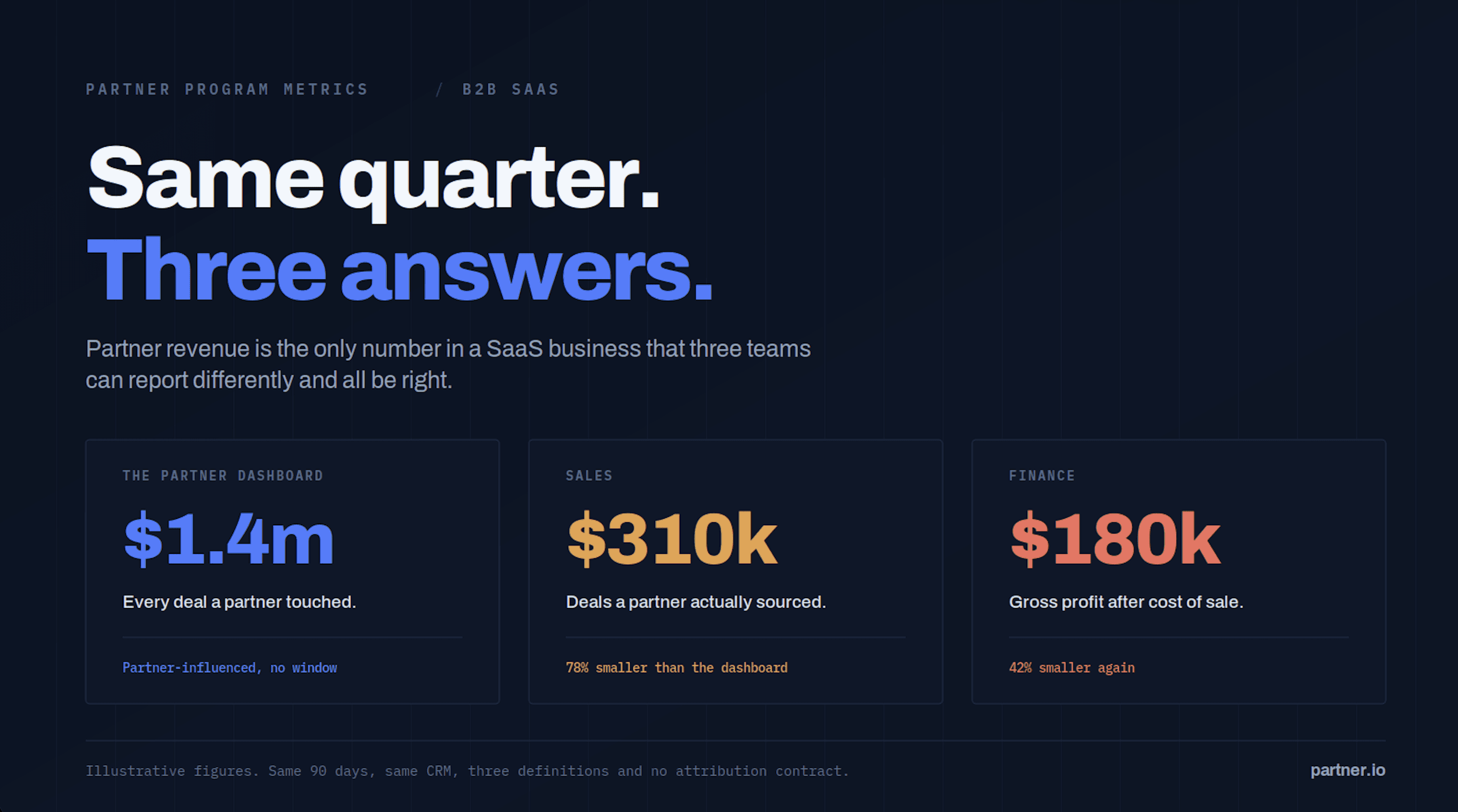
Most partner programmes do not outgrow their CRM. They outgrow the fiction that a partner is just another lead source.
It starts innocently. Add a partner field to the deal. Build a referral form. Track commissions in a spreadsheet. Let one person hold the awkward details in their head.
Then an agency claims an opportunity already in the pipeline. Sales says the deal was theirs. Finance calculates commission from an outdated value. The partner waits a week for an answer nobody can defend.
The problem is not poor CRM administration. The problem is asking a customer system to run an external revenue network.
A CRM manages how your company sells to customers. A PRM manages how your company recruits, enables, coordinates and rewards the businesses that help it sell. Those systems should work together. They should not be forced to do the same job.
Your CRM was built to answer one question: will this deal close. A partner programme asks a different one: who earned what, and can you prove it.
That distinction is the reason platforms such as Partner.io exist.
CRM vs PRM is not a feature comparison
The usual CRM vs PRM debate gets trapped in feature lists. Can the CRM store partners? Can it add custom fields? Can it trigger an email?
Of course it can. That proves very little.
The real question is whether the system can enforce the operating model your partners depend on.
CRM | PRM | |
Primary relationship | Company to customer | Company to partner organisation |
Main users | Internal sales, marketing and service teams | Internal teams and external partner users |
Core records | Accounts, contacts, leads and opportunities | Partner organisations, members, tiers, referrals, registrations, training and rewards |
Main workflow | Qualify, forecast, close and renew | Recruit, approve, onboard, activate, collaborate, attribute and reward |
Commercial question | Will this deal close, and for how much? | What did the partner contribute, what are they entitled to, and what can they see? |
Success measure | Pipeline, conversion, revenue and retention | Activated partners, partner-sourced revenue, partner-influenced revenue, velocity and partner economics |
Where the line actually sits
Your CRM should remain the source of truth for customer accounts, opportunity value, sales stage and forecast.
Your PRM should own partner identity, programme status, deal claims, contribution, enablement, eligibility and partner-facing communication.
The scalable answer is not CRM or PRM. It is a clean boundary between them.
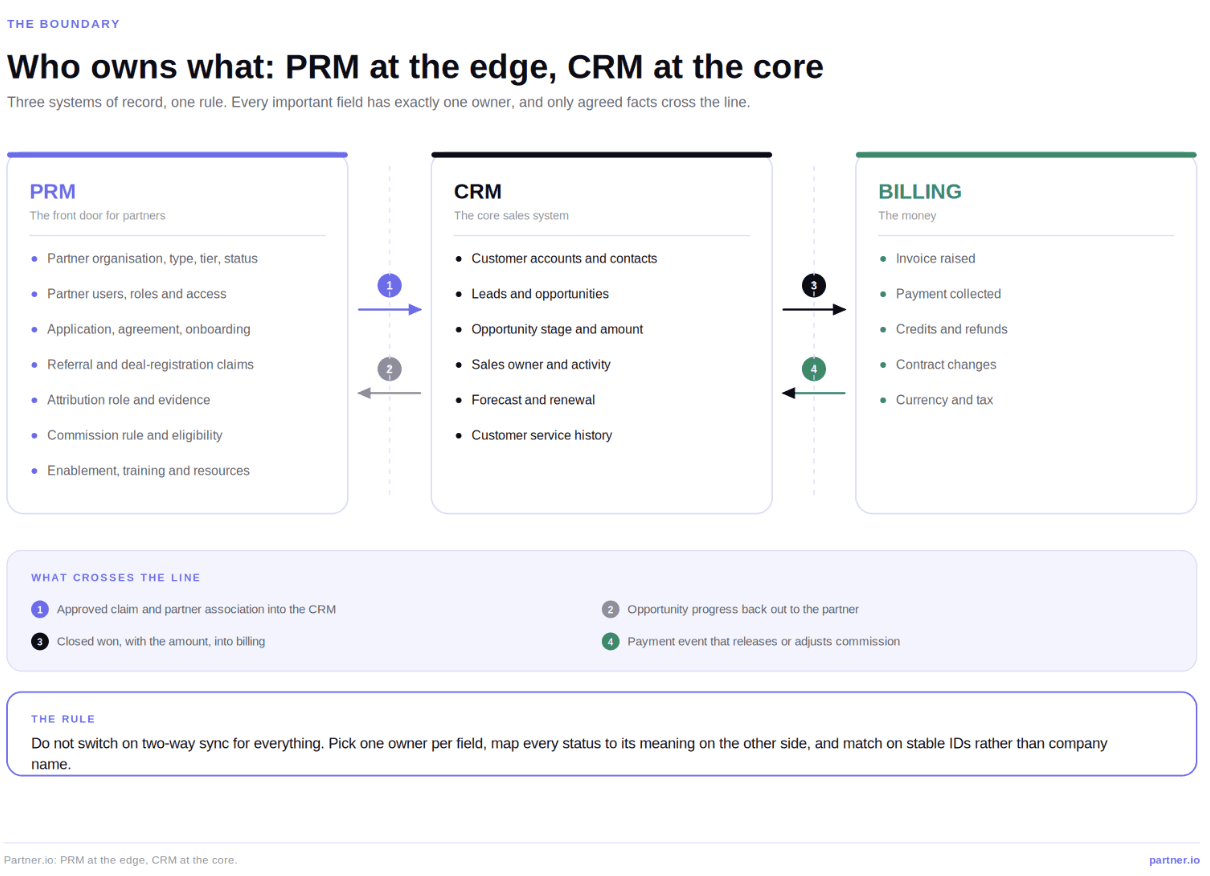
Figure 1: PRM at the edge, CRM at the core, billing for the money. Every important field has one owner.

Why CRM-only partner management fails
CRM-only partner management rarely collapses overnight. It decays through sensible-looking workarounds. The stack was never designed for this, as we argued in your tech stack was built for direct sales.
Each new field fixes this week's problem. Each spreadsheet covers another gap. Each manual check adds a dependency nobody records.
Eventually, the programme runs on exceptions.
A partner is not a field on an opportunity
The first workaround is usually a dropdown called "Partner" or "Referral source". It works until more than one partner contributes.
An integration partner identifies the account. An agency runs the implementation. A reseller handles the contract. Which name belongs in the field?
Choose one and you erase real contribution. Add Partner 1, Partner 2 and Partner 3 and reporting becomes brittle. Use free text and "Acme", "Acme Agency" and "Acme Ltd" appear as three companies.
Modern CRMs can model complex relationships. HubSpot supports custom objects, associations and association labels, and multiple pipelines. Salesforce can support dedicated partner processes. But flexible data structures are not the same as a working partner programme, and the flexibility is rarely free: HubSpot's own documentation notes that association labels require a Professional or Enterprise subscription.
Someone still has to build the application process, external access, claim logic, programme rules, notifications, enablement, rewards and audit history.
The data may fit. The operation does not arrive with it.
A custom object is a filing cabinet. A partner programme is a process. Nobody ever shipped a process by adding a field.
A sales stage cannot represent a partner claim
An opportunity stage answers one question: where is the deal in our sales process?
A partner claim has its own lifecycle:
Submitted
Checked for duplicates
Under review
More information required
Approved or rejected
Protected or expired
Eligible or ineligible for reward
Paid, adjusted or reversed
A deal can be at discovery while the partner claim remains under review. It can be closed won while commission remains pending because the customer has not paid.
One field cannot describe both states without lying about one of them.
This is why serious partner ecosystems separate deal registration from the sales pipeline. Microsoft runs exactly this separation at scale: in Partner Center, a co-sell referral carries its own status set of Received, Accepted, Declined, Expired, Won, Lost and Closed, and it runs on its own clock, with an unanswered referral expiring after 14 days, entirely independently of the sales stage attached to the same deal (Microsoft Learn).
A claim needs governance, not storage.
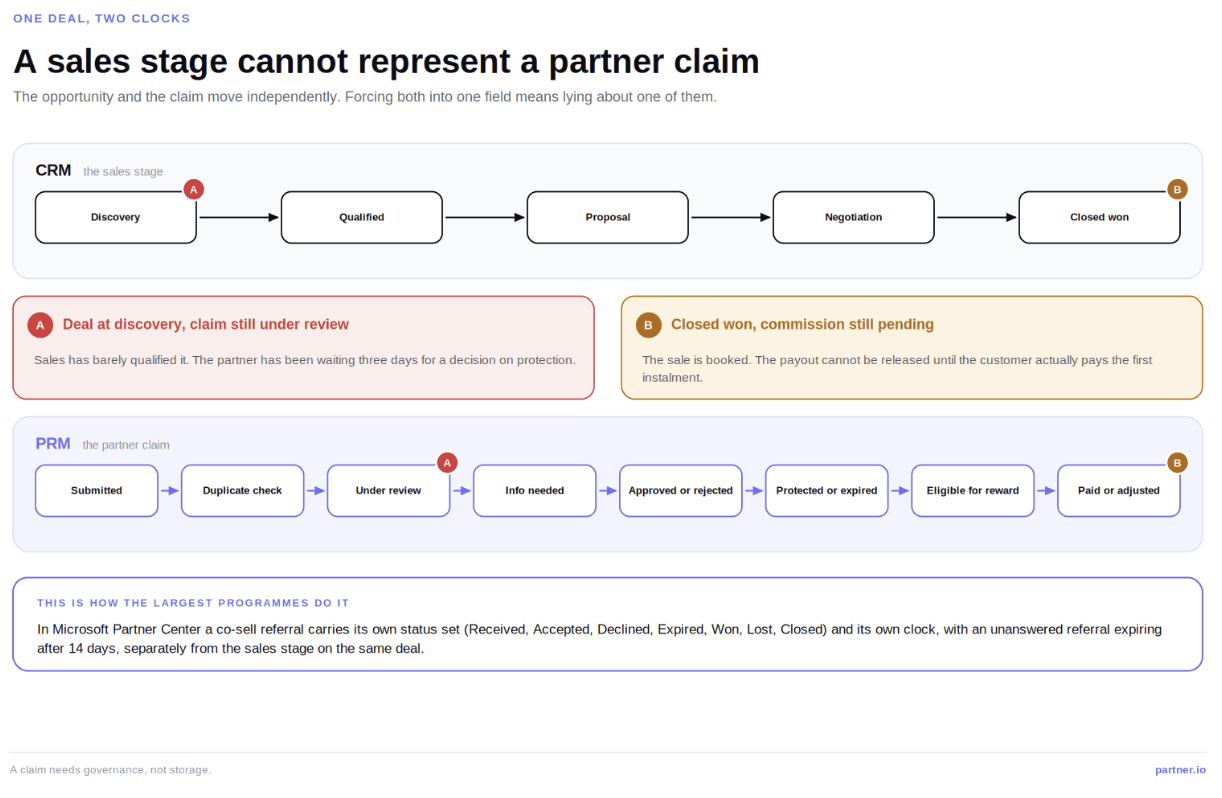
Figure 2: One deal, two clocks. The sales stage and the partner claim do not move together.
Your internal workflow is not a partner experience
A CRM task can remind an employee to reply. It cannot give a partner confidence that the process is fair.
Partners need to submit information, see progress, answer questions, accept agreements, access current material, complete training and understand what happens next.
Giving them broad CRM access is costly and risky. Giving them no access creates an email queue:
Has my lead been accepted?
Who owns the opportunity?
Why was the registration rejected?
Is this sales deck current?
When will we be paid?
One person ends up searching the CRM, inbox, shared drive and commission sheet for every answer. The programme has not scaled. Its operator has become the integration layer.
A partner portal fixes more than access. Done properly, it gives every partner a controlled view of the process that concerns them, without exposing the internal sales system.
If the honest answer to 'where is my referral?' is 'let me check four systems and get back to you', you do not have a programme. You have a person.
Attribution collapses into politics
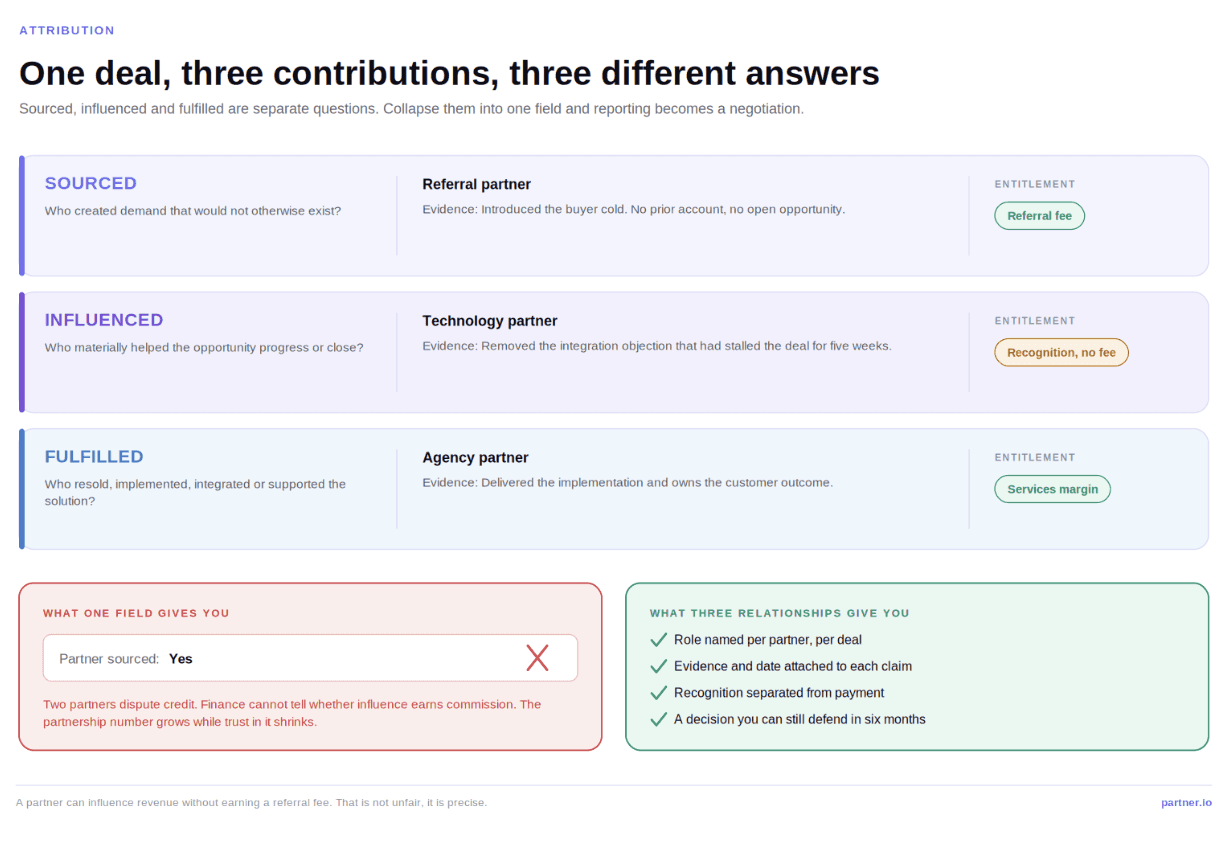
Partner attribution is not one question. It is three:
Sourced: Who created demand that would not otherwise exist?
Influenced: Who materially helped the opportunity progress or close?
Fulfilled: Who resold, implemented, integrated or supported the solution?
A referral partner may source the deal. A technology partner may remove the technical objection. An agency may deliver the implementation.
All three created value. They did not create the same value, and they may not earn the same reward.
Force every contribution into "Partner sourced: Yes" and reporting becomes a negotiation. Sales disputes credit. Finance cannot tell whether influence earns commission. The partnership number grows while trust in it shrinks.
Good attribution names the role, records the evidence and separates recognition from payment. A partner can influence revenue without earning a referral fee. That is not unfair. It is precise.
Deal registration becomes deal notification
A referral form that creates a CRM record is not deal registration software.
Real deal registration requires:
a timestamped claim
duplicate and existing-opportunity checks
acceptance criteria
a review owner and response deadline
evidence and notes
a protection period
expiry and extension rules
partner-visible status
a record of every decision
Without those controls, the partner is merely notifying you that an opportunity exists. They have no protection and no reliable record if the claim is challenged.
This is where trust disappears fastest. Partners can accept a fair rejection. They will not accept an opaque one.
Commission logic drifts away from revenue
Early commission sheets calculate a percentage of closed-won value. Then the customer pays in instalments. A credit is issued. The contract changes. A renewal uses a different rate. The partner changes tier. One product qualifies and another does not.
Now the business has three values:
The amount in the CRM
The amount invoiced or collected
The amount used to calculate commission
If nobody can explain the relationship between them, the payout process is uncontrolled.
A PRM should attach the commercial rule to the partner, qualifying event and effective date, and preserve the calculation, approval and payment history. The CRM still records the sales outcome. The billing system still records the money.
The goal is not merely automation. It is a calculation you can defend.
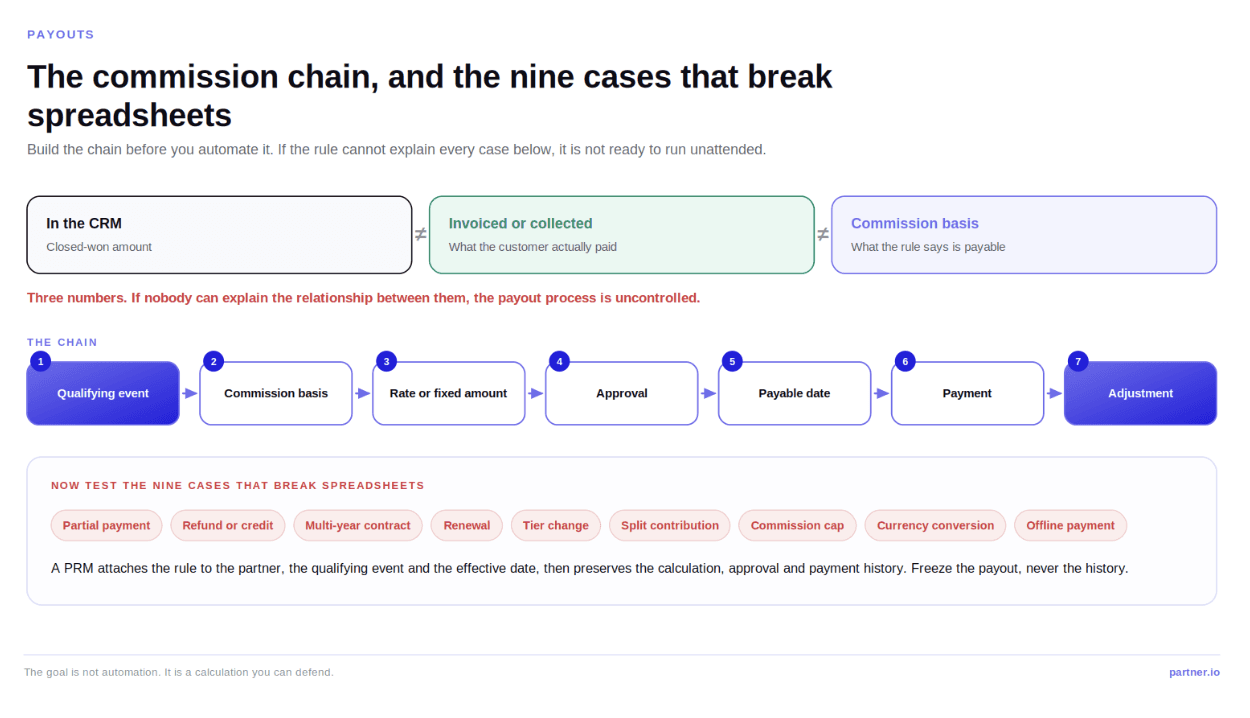
Figure 4: Build the commission chain before you automate it, then test the nine cases that break spreadsheets.
Different partner motions get forced into one scorecard
Referral, co-sell, agency, integration and reseller programmes do not create value in the same way.
Referral partners: accepted referrals, conversion, revenue and lead quality
Co-sell partners: overlaps converted into action, influenced pipeline, win rate and sales-cycle impact
Agencies: introductions, implementation success, customer outcomes and expansion influence
Integration partners: activated connections, shared customers, depth of use, retention and expansion
Resellers: registered pipeline, sell-through, forecast accuracy, renewals and support quality
Put every motion into one CRM report and the easiest metric wins, usually deal value. The programme starts rewarding visible pipeline while ignoring adoption, implementation and retention.
That is not measurement. It is convenience dressed as strategy. The same mismatch shows up in process as well as reporting, which is why sales ops built for reps fails partner teams and why sales and partner playbooks cannot be the same document.
Stop running your partner programme on custom fields Partner.io gives you partner records, deal registration, attribution and commission in one place, with a portal your partners can actually use. Start your 7-day free trial and have your programme live the same day. No credit card required. Prefer a walkthrough first? Book a demo. |
What this looks like in practice
An agency submits a £28,000 opportunity and says it introduced the buyer last week.
The account already exists in the CRM. So does an opportunity created three months earlier, untouched for six weeks. The sales rep rejects the claim because "the deal was already ours". The agency produces an email thread showing that its consultant restarted the conversation and booked the new meeting.
In a CRM-only process: the argument moves to Slack. Someone changes the referral-source field. Nobody records why. At quarter end, the edited field becomes official history.
In a PRM-led process: the claim matches the existing account and opportunity. The original source remains direct. The agency is recorded as an influencing partner, with its evidence attached. The programme rules decide whether reactivation qualifies for payment. The agency sees the decision and the reason. Sales keeps the opportunity.
No duplicate pipeline. No rewritten history. No CRM access for the agency.
That is the difference between recording partner activity and operating a partner programme.
The PACT test: does this workflow belong in the CRM or the PRM?
Use PACT to decide whether a workflow belongs in the CRM, the PRM or both.
Participation
Who must act?
If external users need to submit, update, approve, learn, download or check status, the workflow needs a partner-facing layer. Email is not an interface. A CRM seat is not a partner experience.
Attribution
Can several organisations contribute to one opportunity?
If yes, store each contribution as a relationship with a role, date, evidence and status. Stop adding partner fields to the deal.
Commercial rules
Can partner type, tier, product, territory, term, payment event or renewal status change entitlement?
If yes, keep the rule and its effective dates in the PRM. A CRM workflow containing today's rate cannot explain last quarter's payout.
Traceability
Could you defend the decision six months later?
Registrations, rejections, exceptions, tier changes and commissions need an audit trail. If the answer lives in an overwritten property or somebody's inbox, the process has already failed.
One PACT signal may justify a controlled workaround. Two demand firm process design. Three or four mean you are running a partner programme without partner infrastructure.
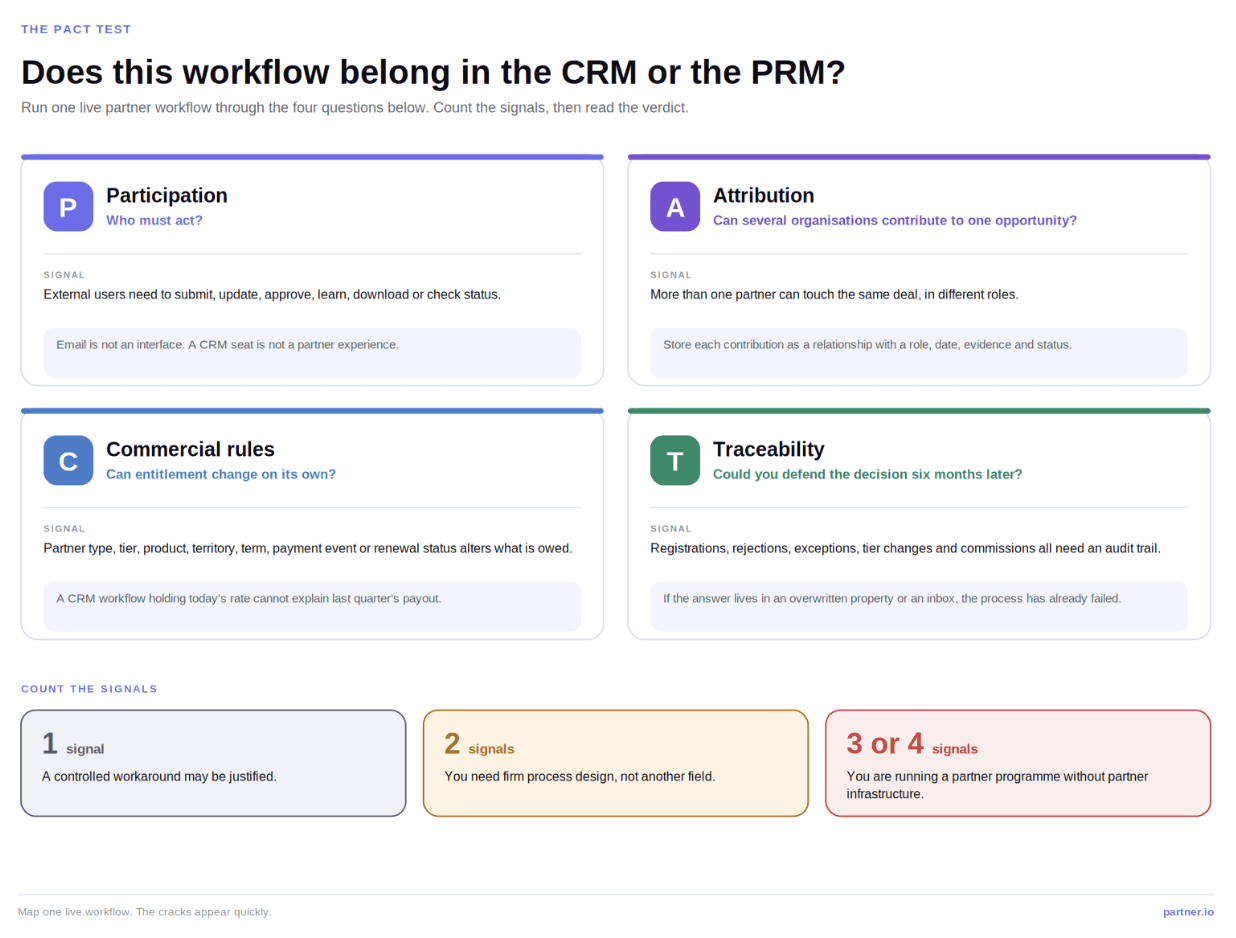
Figure 5: The PACT test. Count the signals, then read the verdict.
The model that scales: PRM at the edge, CRM at the core
The architecture is simple:
The PRM is the front door and operating layer for partners.
The CRM owns the customer, opportunity and forecast.
The billing system confirms what was invoiced or collected.
The integration moves agreed facts between them.
Simple does not mean loose. Every important field needs one owner.
Data or action | System of record | What moves between systems |
Partner organisation, type, tier and status | PRM | Selected partner attributes |
Partner users, roles and access | PRM | Only necessary contact data |
Application, agreement and onboarding | PRM | Activation status if needed |
Referral or deal-registration claim | PRM | Approved claim and CRM association |
Customer account and contacts | CRM | Only data the partner may see |
Opportunity stage, amount and forecast | CRM | Relevant progress back to the partner |
Attribution role and evidence | PRM | Reporting fields or associations |
Commission rule and eligibility | PRM | CRM or billing event used for qualification |
Invoice or payment status | Billing system | Event that releases or adjusts commission |
Do not switch on two-way sync for everything. That creates silent overwrites and endless arguments about which number is correct.
Six things to define before you integrate
Identity: Which stable IDs connect each partner, account, contact and opportunity?
Creation: When should a referral create a record, and when should it attach to an existing one?
Ownership: Which system may change each field?
Status mapping: What does every state mean on the other side?
Failure handling: Who is alerted, and how can the event be replayed without creating a duplicate?
Visibility: What can each partner see?
The matching trap nobody tests
Never rely on company name alone for matching. Names change, subsidiaries collide and domains vary. Use stable IDs and explicit rules.
This matters most with API-created records. HubSpot's documentation is blunt about it: companies created through its API, including records from installed third-party sync apps, are not deduplicated by the company domain name property.
Read that twice if you are planning a HubSpot or Salesforce sync. A weak integration can create the exact data problem it was bought to solve.
Five workflows your PRM should control
1. Application and onboarding
The workflow should decide whether the partner fits, which motion and agreement apply, who gets access and what must happen before activation.
At minimum, it needs:
structured application data
review and owner assignment
approval or rejection with a reason
the correct agreement
role-based onboarding
relevant training and resources
a defined first-value milestone
Do not count an approved application as an active partner. Activation is behaviour: completing essential onboarding, submitting a qualified opportunity, launching an integration or starting a co-sell plan. If recruitment itself is the bottleneck, partner discovery is a different problem from partner operations, and mixing the two hides both.
2. Referral and deal registration
The workflow must answer four questions quickly:
Is the customer already known?
Is there an open opportunity?
Did the partner source new demand or influence existing demand?
Does the claim meet the published rules?
Automate obvious matches. Route ambiguous claims for review. Show the status to the partner. Escalate missed response deadlines. Expire protection when the partner stops progressing the deal.
3. Co-sell coordination
An account overlap is not pipeline. A chat is not influence.
Record the shared account, partner contact, internal owner, agreed contribution, next action and date. Define the evidence required before counting influenced pipeline. Decide what may be shared before exposing opportunity data. Account mapping tells you where the overlaps are; it does not tell you anyone did anything about them.
Co-sell needs fewer vague meetings and more explicit commitments.
4. Commission and payout operations
Build the chain before automating it:
Qualifying event → Commission basis → Rate or fixed amount → Approval → Payable date → Payment → Adjustment
Then test the cases that break spreadsheets:
partial payment
refund or credit
multi-year contract
renewal
tier change
split contribution
commission cap
currency conversion
offline payment
If the rule cannot explain those cases, it is not ready to run unattended.
5. Enablement and engagement
Give each partner what their motion demands.
A referral partner needs a precise ideal-customer profile, qualifying questions and an easy hand-off. A reseller needs product depth, pricing, objection handling and deal protection. An agency needs implementation guidance. An integration partner needs technical documentation, launch plans and adoption data.
Track behaviour that predicts production:
onboarding completion
time to first meaningful action
active users per partner organisation
training progress
content use
accepted submissions
days since last activity
Automate the chasing. Keep human attention for partners with real potential. An engagement hub exists so that the chasing is not somebody's Thursday afternoon.
How to move from CRM-only to CRM plus PRM
Do not begin by importing every partner contact you have ever collected. Begin with the rules.
Define each motion
For every partner type, write down:
what the partner does
what your team does
what value is created
what evidence proves it
what the partner can earn
what the partner can see
what ends or pauses the relationship
If two motions follow different rules, do not squeeze them into one workflow for administrative convenience.
Clean the partner record
Create one canonical organisation record for each partner. Connect its users, parent relationships, programme membership, type, tier, owner, territory and status.
Merge duplicates. Archive dead records. Preserve the history that matters.
A large database means nothing if half of it consists of old applicants and contacts who left their companies. That is the real cost described in the hidden cost of managing partners in spreadsheets.
Set the attribution policy
Define sourced, influenced and fulfilled in plain English. State the evidence required, when attribution must be recorded, whether several partners can receive recognition and which roles carry payment rights.
Publish the rules internally and to partners. A policy hidden in an operations document is not a policy.
Map ownership and sync behaviour
Document stable IDs, creation rules, field ownership, status mappings, permissions and error handling.
Test duplicates before testing the happy path. Test existing opportunities. Test two partners on one deal. Test a changed deal value, partial payment and renewal.
Easy demos do not reveal the failures that destroy trust.
Pilot with awkward examples
Use a small group of engaged partners across different motions. Reconcile the PRM, CRM and billing result for every test case.
If three people explain the outcome three different ways, the workflow is not finished.
Move the front door
Once the pilot works, require applications, referrals, registrations and partner requests to enter through the PRM.
Leaving email and spreadsheets open as parallel routes guarantees fragmented data. Partners will use the new process when it gives them something better: faster decisions, visible status, current resources and reliable payment information.
When the system breaks
It will. Build for recovery.
Duplicate opportunity
Pause automated progression. Preserve both record IDs and timestamps. Identify the canonical CRM opportunity, attach the PRM claim, resolve the duplicate and confirm that attribution survived. Fix the matching rule before replaying the event.
Attribution dispute
Separate opportunity ownership from partner contribution. Review the evidence and the published rule. Record source, influence and fulfilment independently. Apply commercial eligibility after attribution is settled. Give the partner a reasoned decision, not a silent field change.
Commission mismatch
Freeze the payout, not the history. Compare CRM value, invoice value, cash collected and commission basis. Check the rule version, effective date, cap, credit, currency and split. Post an adjustment with a reason. Never overwrite the original calculation.
Failed CRM sync
Keep the partner submission and show an honest pending state. Alert the owner. Retry with a stable external ID so the same event cannot create another lead or opportunity. Reconcile both systems after recovery.
Inactive partners
Do not send another generic newsletter.
Find the stalled milestone. If approved partners never complete onboarding, remove friction. If trained partners never refer, sharpen the ideal-customer profile. If active partners stop, inspect rejection rates, response times, sales follow-through and payout delays before blaming engagement.
When do you actually need PRM software?
Not when you hit an arbitrary partner count.
Ten complex resellers can create more operational load than 200 low-touch affiliates. The trigger is repeated ambiguity:
Partners need secure self-service access.
More than one partner can touch a deal.
Referrals require approval or protection.
Partner type or tier changes the workflow.
Enablement happens before revenue.
Commission depends on more than closed-won value.
Duplicate and existing-account decisions create conflict.
Reporting must separate sourced, influenced and fulfilled revenue.
The programme depends on spreadsheets, inboxes and one person's memory.
If several are true, customising the CRM again is not the cheaper option. Its cost is simply hidden in administration, disputes, corrections and partners who quietly stop sending opportunities.
Nobody puts 'four hours reconciling a commission sheet' on a roadmap. That is precisely why it never gets fixed.
Where Partner.io fits
Partner.io is built for the work that starts where the CRM stops.
Partners get one place to join, access the right rooms and resources, complete training, register opportunities and follow progress. The programme gets structured partner records, types, tiers, workflows, attribution, reporting and commission management without burying the sales system under partner-only fields and exceptions.
The CRM remains central:
Approved partner activity moves into the sales process.
Relevant opportunity outcomes come back to the partner workflow.
Sales keeps its pipeline.
Partners get visibility without seeing the internal CRM.
Finance gets a traceable basis for commission.
That is what scalable channel partner management should feel like: fewer hand-offs, fewer arguments and no mystery about who owns what. It is the same shift described in the difference between having partners and running a partner programme.
Your CRM is not the problem. Asking it to be a PRM is.
A CRM can show that a partner touched a deal. It cannot run the relationship around that contribution without becoming a custom software project.
That relationship includes access, evidence, response times, enablement, protection, commercial rules and trust. Once partner revenue matters, those details are not administration. They are the programme.
Keep the customer and forecast in the CRM. Put the partner journey, deal claims, contribution rules and partner experience in Partner.io.
Map one live workflow using the PACT test. The cracks will appear quickly. Fix the operating model before another field, spreadsheet or disputed commission makes the decision for you.
Try it on your own programme Map your messiest partner workflow, then run it in Partner.io instead of in a spreadsheet. Self-serve setup, live the same day, zero fees on commissions. No credit card required. Cancel anytime. Or see pricing and book a demo. |
Keep reading