Product
SWOT Analysis Template and Competitive Landscape Guide for Strategic Clarity
SWOT Analysis and Competitive Landscape
The strategy tool that decides who wins before the deal is even pitched
There is a moment in every serious business where instinct stops being enough.
Revenue slows. Competitors start showing up in sales calls. Customers ask sharper questions. Leadership wants answers that go beyond gut feel. At that point, strategy either becomes a discipline or it becomes guesswork with prettier slides.
This is where SWOT analysis and competitive landscape work earn their keep.
Not as abstract theory. As a working system that shows you what you are good at, where you are exposed, and where the next wave of growth is actually hiding.
Most teams already do some version of this. They just do it badly. Notes in docs. Tables in spreadsheets. Half finished decks that go stale the second they are saved.
A real SWOT and competitor view should behave more like a living model. Something you can update, share, and use to make decisions that stick.
That is exactly what this template is built to support.
Why SWOT still matters when the market is noisy
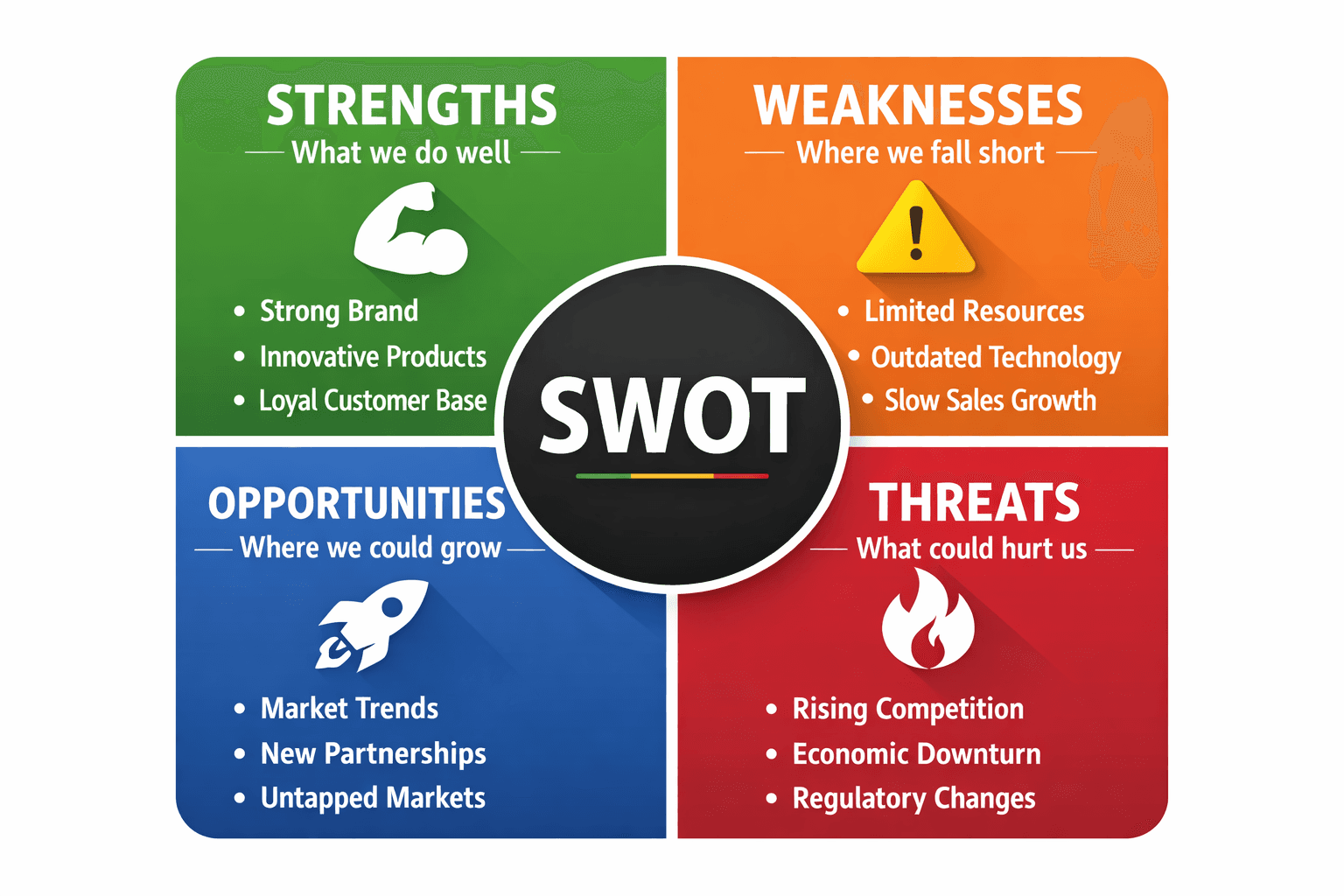
SWOT has survived decades of management trends for one simple reason. It forces brutal clarity.
You cannot talk about strategy without first being honest about four things:
What you are good at
What is holding you back
Where the market is opening up
What could knock you off course
Most teams only do the first one well.
They list strengths like product quality or customer loyalty. Then they rush through weaknesses, sprinkle in vague opportunities, and paste in generic threats like competition and economy.
The value of SWOT is not in filling boxes. It is in forcing tradeoffs.
If your biggest strength is engineering depth but your biggest weakness is speed, you cannot pretend you are a fast mover. If your opportunity is an underserved segment but your threat is a low cost competitor, your pricing and positioning need to change.
When this is written clearly and reviewed regularly, it stops being a planning exercise and starts acting like a decision filter.
Competitive landscape is where most strategy falls apart
SWOT tells you about you. Competitive landscape tells you how the world sees you.
This is the part that usually lives in slide decks that no one updates. Yet it is the part sales, marketing, and leadership lean on every day, whether they admit it or not.
A proper competitive view answers questions like:
Why do customers pick us over them
Why do we lose deals we should win
Where are we priced wrong
Who are we actually built for
The competitor comparison table in this template is deceptively simple. Product offering. Pricing. Market presence. Target customer. Differentiators. Reviews.
When you put real data in those rows, patterns appear very quickly.
One competitor might look cheaper until you factor in what they actually include. Another might have louder marketing but weaker product depth. Another might be winning a segment you are barely touching.
Those patterns are where strategy comes from.

The real power comes from connecting SWOT and competition
Most teams run SWOT in one workshop and competitive analysis in another. That separation kills insight.
The magic happens when you let them talk to each other.
Your strengths should map to where competitors are weak.
Your weaknesses should show where competitors are winning.
Your opportunities should reflect gaps no one is owning yet.
Your threats should connect to real moves rivals are making.
That is why this template ends with Key Insights.
Not fluffy summaries. Real answers to:
Where do we win most often
Where do others have the edge
What white space exists
What leadership should do next
This is where you stop analysing and start choosing.
Why this work breaks when it lives in files
Most SWOT and competitor work dies quietly.
Someone fills in a spreadsheet. Someone else pastes it into slides. A PDF gets sent. Six months later, no one remembers what is still true.
The problem is not the framework. It is the container.
Strategy changes. Markets move. New competitors appear. Old assumptions break. When your analysis lives in static files, it freezes in time.
That is why teams who actually use this stuff are moving it into living systems.
This is where Assemble comes in.
Turning a template into a strategy system with Assemble
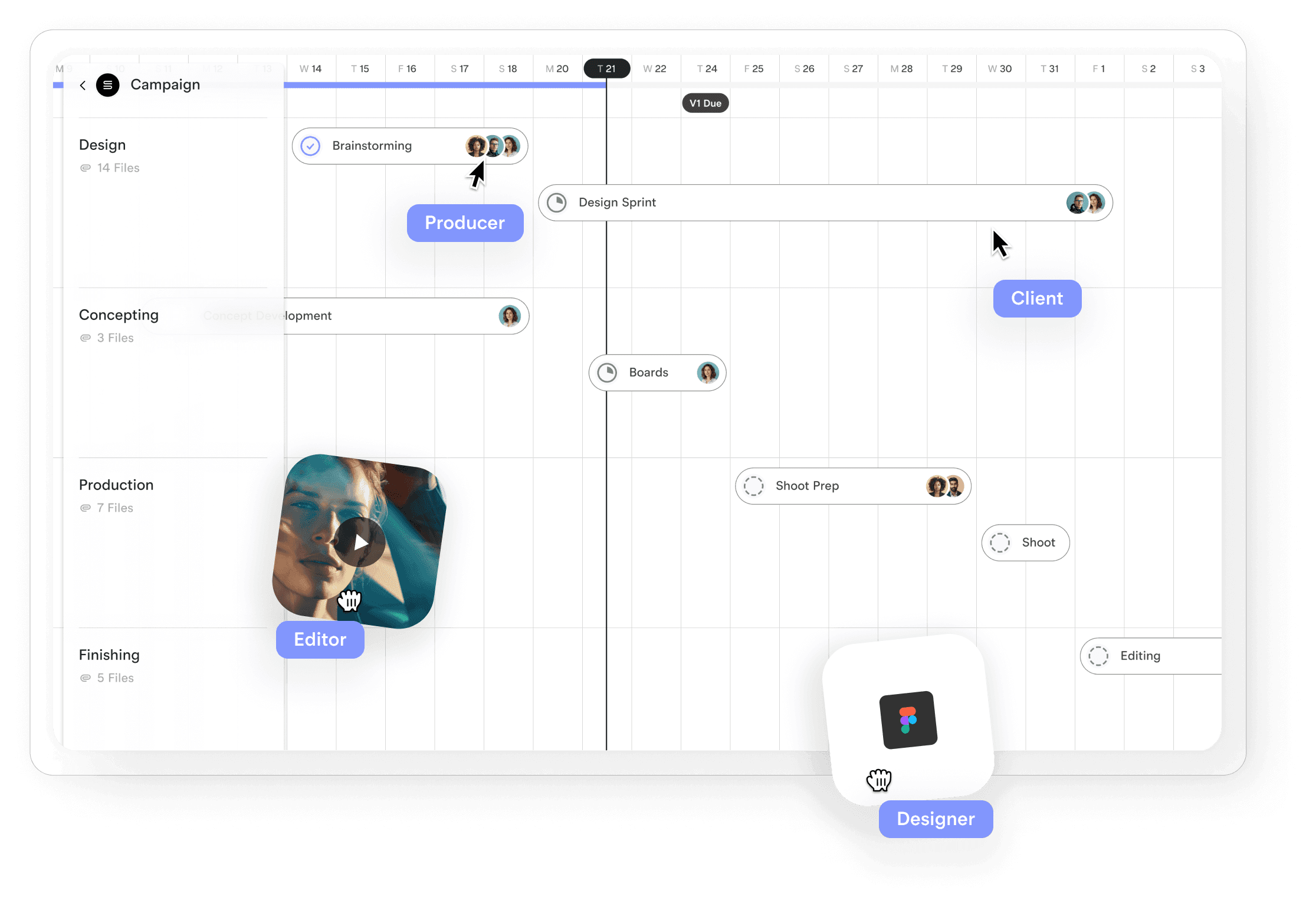
Assemble lets you turn this SWOT and Competitive Landscape template into a working strategy hub.
Each field becomes structured.
Each competitor becomes a record.
Each insight becomes something you can update, comment on, and link to real evidence.
Your SWOT stops being a one off exercise and starts acting like a dashboard.
When sales hears a new objection, it gets added.
When product ships a feature, strengths update.
When a competitor changes pricing, the table changes with it.
Everyone sees the same truth, in one place, without hunting through folders or emailing attachments.
That is how strategy stays alive.
What changes when you do this right
Teams who run SWOT and competitive analysis properly notice a few things almost immediately.
Sales conversations get sharper.
Positioning becomes clearer.
Leadership debates get shorter.
Product bets get more focused.
Not because people are suddenly smarter, but because the information is finally visible.
That visibility is the difference between reacting and leading.

Start with a template that actually gets used
The SWOT Analysis and Competitive Landscape template is simple on purpose. It gives you just enough structure to think clearly without boxing you in.
In Assemble, it becomes something better.
A place where your market reality lives.
A place where decisions get grounded.
A place where strategy stops being a slide and starts being a tool.
If you want to stop guessing and start seeing where you really stand, this is the place to begin.