Startups
Marketing Campaign Snapshot Template to Streamline Planning and Improve Results

The Marketing Campaign Snapshot That Keeps Teams Aligned (and Campaigns on Track)
Campaigns rarely fail because of bad ideas. They fail because the thinking never makes it out of people’s heads in a clear, shared way.
You have probably seen it happen. A campaign kicks off with energy. Slack lights up. Docs multiply. A few weeks later, nobody can agree on the original goal, channels drift, and reporting turns into a scramble. The work still ships, but it ships heavier than it needed to.
This is where a marketing campaign snapshot earns its place.
Not a bloated brief. Not a 30-page deck. A tight, executive-level view that captures intent, focus, and measurement in one place.
Why a snapshot works when long briefs don’t
Most teams do not lack documentation. They lack clarity.
A snapshot forces discipline. It asks the uncomfortable questions early. What are we actually trying to move? Who is this for? How will we know it worked? When those answers live in one visible place, decision-making gets easier. Trade-offs become obvious. Updates stop turning into debates.
Leaders glance at it and understand the campaign in seconds. Contributors know what to prioritise without a meeting. New joiners can catch up without digging through threads.
That is the real value. Shared context, fast.
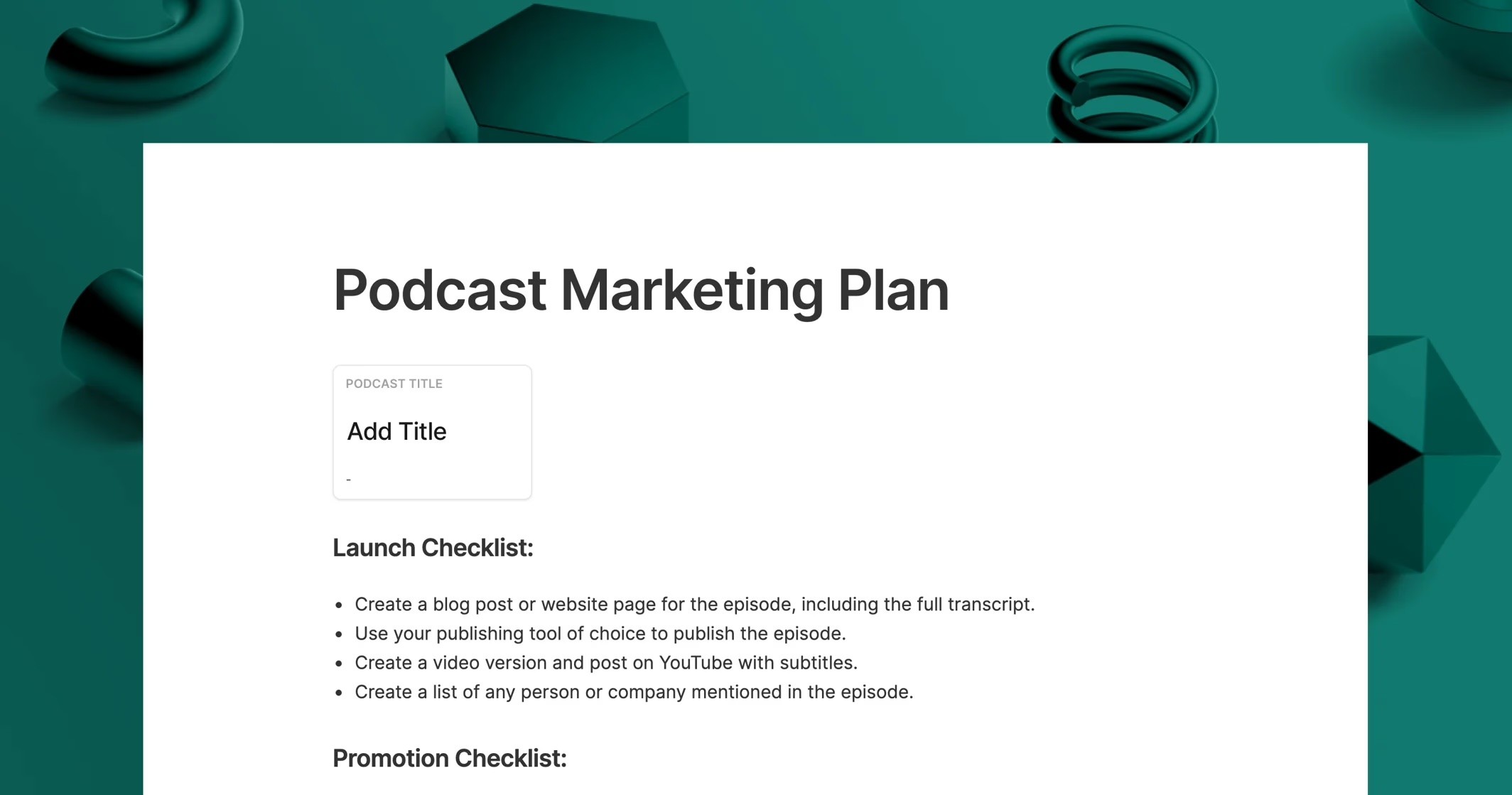
The anatomy of a strong campaign snapshot
A useful snapshot balances structure with breathing room. Enough shape to guide thinking, enough flexibility to reflect reality.
Here is how the best ones tend to come together.
Campaign overview
This is the anchor. Name the campaign. Assign clear ownership. Lock in timing and budget. Nothing fancy, just unambiguous. If ownership is fuzzy here, it will be fuzzy everywhere else.
Objectives and goals
One primary objective is usually enough. Two at most. Anything more and focus slips.
SMART goals help, but only if they are written like a human would write them. Clear targets, real constraints, a reason they matter. If a goal does not change behaviour, it is decoration.
Target audience
Skip the demographic essay. Capture what actually drives decisions. The main pain point. What motivates action? Where attention already lives. This section should guide channel and message choices without needing explanation.
Key messages
One core message. Supporting points only if they earn their keep.
If someone cannot repeat the core message after reading this once, it is not ready. Simplicity scales better than cleverness.
Channels and tactics
Limit this list on purpose. Three or four channels done well outperform ten done poorly.
Be specific about tactics. “Social” is vague. “Founder-led LinkedIn posts twice a week” is actionable.
Success metrics
Metrics should map directly back to the objective. Leads, engagement, conversion, pipeline impact. Choose what matters and ignore the rest.
Targets matter here. Without them, reporting turns into storytelling.
Key milestones
Milestones create momentum. Kickoff, launch, mid campaign check, wrap up. They give the team natural moments to pause, adjust, and learn.

Where most snapshots fall apart
The biggest mistake is treating the snapshot as a static document.
Campaigns move. Assumptions change. A snapshot should evolve with the work. When it lives in a flexible template instead of a locked file, updates feel natural rather than disruptive.
Another common issue is fragmentation. One version in a slide deck, another in a doc, numbers living somewhere else. The snapshot loses authority when it is not the single source of truth.
Building snapshots that actually get used
The best teams build snapshots inside tools designed for living documents. Not because it looks nicer, but because it changes behaviour.
When your campaign snapshot is a template you can reuse, adapt, and share, a few things happen:
Every campaign starts from a higher baseline
Thinking improves through repetition, not reinvention
Updates stay visible, so alignment lasts beyond kickoff
Reporting becomes simpler because the structure already exists
This is exactly why Assemble exists.
Assemble lets you turn a campaign snapshot into a working document, not a one-off artifact. You can create the template once, refine it over time, and reuse it across campaigns without losing consistency. Teams collaborate in the same space. Stakeholders see progress without chasing updates. Knowledge compounds instead of resetting every launch.
If you want campaigns that feel calmer, clearer, and easier to run, start with a snapshot that respects attention and rewards focus.
You can explore a ready-to-use Marketing Campaign Snapshot template in Assemble, adapt it to your workflow, and make it part of how campaigns actually run, not just how they are planned.