Product
Launch Smarter with a Cross-Functional Calendar | Assemble

Cross-Functional Launch Calendars: The Only Way Modern Teams Actually Ship on Time
Every launch looks simple on the surface. Pick a date. Build the thing. Tell the world.
In reality, launches fall apart in quieter, messier ways. Marketing waits for the product. Sales never sees the final messaging. Ops discovers a broken workflow after customers are already clicking. Everyone thought someone else owned the detail.
The problem is not effort. It is visibility.
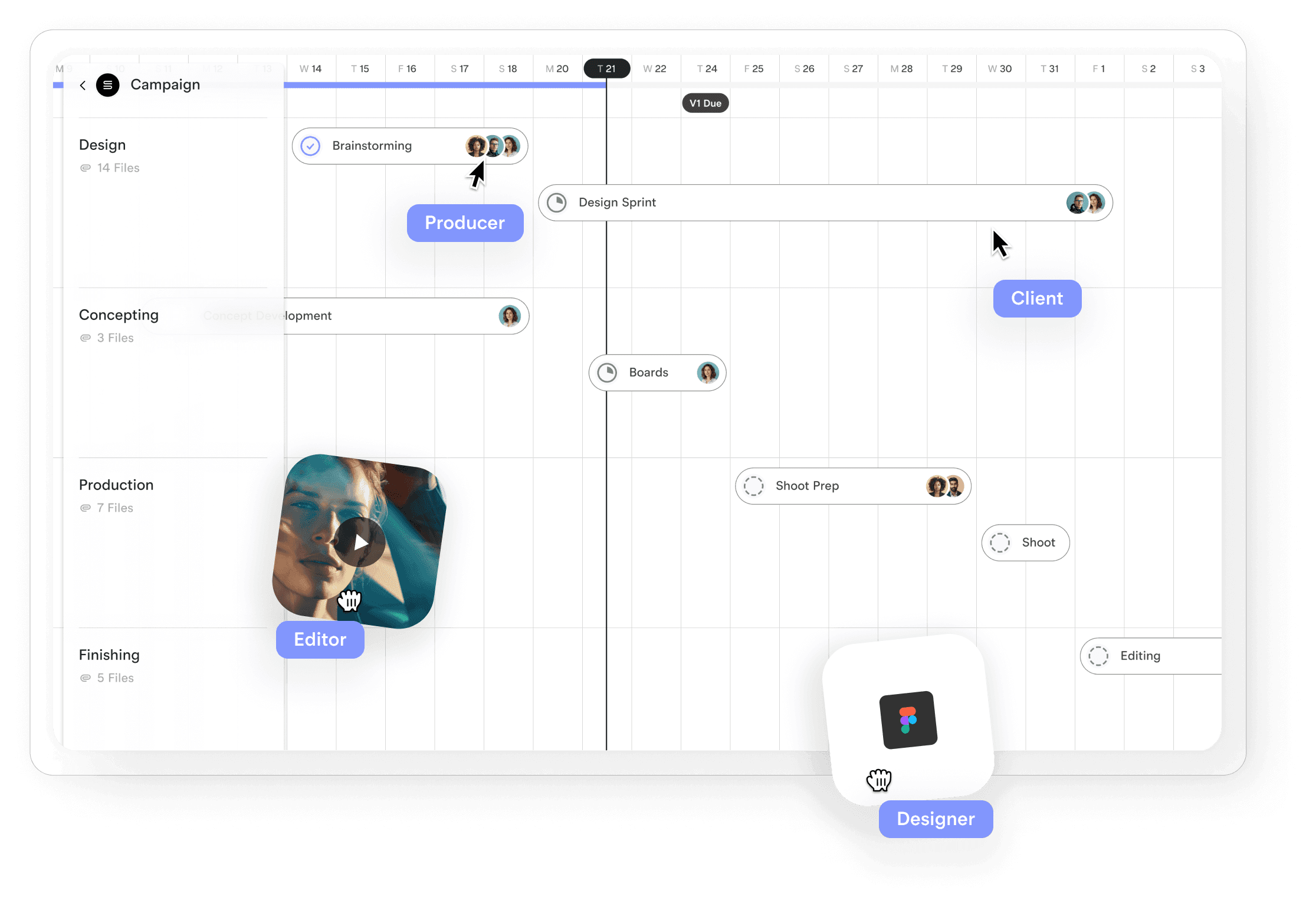
That is why the Cross-Functional Launch Calendar exists. Not as another project doc that dies in a shared folder, but as a living system that shows every deliverable, every dependency, and every owner in one place.
And when it is built properly, it changes how teams ship.
Why most launches fail before launch day
Most teams do not miss deadlines because they are disorganized. They miss them because work is scattered.
Product runs on roadmaps. Marketing lives in campaign plans. Sales tracks enablement in decks. Ops has its own backlog. Customer teams manage support updates somewhere else entirely.
Each document makes sense on its own. None of them tells the full story.
So what happens?
A feature is ready, but the onboarding flow is not.
Campaigns go live, but sales have not been trained.
Customer comms go out, but the data pipeline is still broken.
The gaps live between teams. Traditional planning tools rarely show those gaps clearly.
A cross-functional launch calendar does.
What a cross-functional launch calendar actually does
At its core, this template is simple. It creates one shared source of truth that answers four questions for everyone involved:
What are we launching?
Who owns each part?
When does each piece need to be done?
What depends on what?
Instead of forcing every team into a single rigid workflow, it respects how each function works, while still aligning them to the same outcome.
Think of it as a launch map rather than a checklist.
How the structure prevents blind spots
Let’s walk through the sections and why each one exists.
1. Launch Overview
This is the anchor.
Launch name, owner, target date, success metric, and current status.
It sounds obvious, yet many launches drift because the goal is vague. “Ship the feature” is not a goal. “Increase activation by 12 percent within 30 days” is.
When this section is visible to everyone, debates get faster. Decisions get cleaner.
2. Timeline by phase
Breaking the launch into phases is what turns chaos into motion.
Planning
Development and QA
GTM preparation
Launch
Post-launch review
Each phase has a start, an end, an owner, and a status. You can see instantly where momentum is building and where it is stalling.
This is where hidden delays surface early. If GTM preparation cannot start because QA is behind, that dependency is no longer invisible.
3. Cross-functional workstreams
This is the heart of the template.
Each function gets its own lane with concrete deliverables:
Product: roadmap finalization, testing, release notes
Marketing: campaign assets, PR, social, launch content
Sales: enablement decks, battlecards, training
Customer teams: onboarding updates, support docs, comms
Ops and IT: tooling, workflows, reporting
Every line has an owner, a due date, and a status.
There is no guessing who is responsible. There is no “I thought you had that.”
4. Milestones and dependencies
This section prevents last-minute fire drills.
Beta complete. GTM assets ready. Sales training delivered. Customer communications sent. Internal go or no-go.
Each milestone is tied to a function and a date. If one slips, everyone sees the impact immediately.
This is where launches stop being hopeful and start being predictable.
5. Risk and escalation
Most teams avoid writing down risks because it feels pessimistic. In reality, it is professional.
When blockers are logged with impact, owner, mitigation, and escalation needs, you remove politics from problem-solving. The conversation becomes practical: what is at risk, who owns it, and what we are doing about it.
6. Post-launch review
This is the section almost everyone forgets.
What worked. What broke. What customers actually said. What changes next time?
Without this, every launch is treated as a one-off. With it, it launches compound. Each cycle becomes sharper than the last.

Why templates beat blank pages
Here is the uncomfortable truth: most teams do not struggle with ideas. They struggle with structure.
Starting from a blank page forces every person to design the process before they can even do the work. That is slow. It is also inconsistent.
A well-designed template gives you momentum immediately. The questions are already there. The logic is already tested. You are not inventing a system, you are running one.
This is where Assemble comes in.
Building this in Assemble
Assemble is not just a place to store documents. It is a template builder designed for real work.
With Assemble, this launch calendar becomes:
A reusable asset you can clone for every release
A structured workspace where every field has meaning
A system that keeps product, marketing, sales, ops, and customer teams aligned without endless meetings
You can adapt it for different types of launches. A product update. A rebrand. A new market entry. The framework stays stable, the content changes.
Over time, your launch process becomes a muscle rather than a scramble.
The hidden benefit: trust between teams
When everyone sees the same plan, tension drops.
There is less second-guessing. Fewer “why did no one tell us” moments. Fewer late nights fixing problems that were predictable weeks earlier.
People stop working around each other and start working with each other.
That is not a productivity hack. It is an operating system.

From one launch to a launch machine
Great teams do not just ship once. They ship consistently.
What separates them is not talent. It is a repeatable process.
A cross-functional launch calendar turns launches from stressful events into structured routines. And when that structure lives inside a platform built for templates, not just documents, it scales with you.
If you are tired of launches that feel heroic but fragile, build the system once. Then reuse it.
You already have the framework.
Now you just need the place to run it.
Build your launch calendar in Assemble. Turn planning into execution. Make every launch easier than the last.
Strong launches do not happen by chance. They happen when plans are visible and shared.
Assemble gives you a Cross-Functional Launch Calendar template designed for how teams actually ship. No bloated project plans. No scattered docs. Just a clear structure that shows owners, timelines, dependencies, and risks in one place, so nothing important gets missed when it matters most.
Set it up once. Reuse it for every launch. Learn from each cycle and ship with more confidence every time.
Customise it. Share it across teams. Keep everyone aligned in real time.
Start with the Cross-Functional Launch Calendar template in Assemble.