Product
Account Mapping That Closes More Deals With Partners

Account mapping that actually makes you money
Most teams claim they do account mapping. What they really do is stash a few contacts in a spreadsheet and hope nothing awkward happens.
Meanwhile deals stall, partners get ignored, and sales accidentally cold-email people their partners have known for years.
That is the mess that our new account mapping feature fixes. Properly.
If your deals are getting bigger, slower, and more political, winging coordination is no longer cute. It is expensive.
Why account mapping usually disappoints
Account mapping fails because it lives in theory, not execution.
It shows up as a quarterly exercise. Too late to matter.
It lives in slides. Detached from live deals.
It treats partners like lead vendors instead of leverage.
Sales tracks power and budget. Partners hold trust and access. When those worlds are not stitched together, you get crossed wires, missed intros, and deals that quietly die.
Winning teams stopped tolerating that chaos.

What serious account mapping looks like
Real partner account mapping is not about diagrams. It is about control.
It gives you a single, shared view of:
Who matters inside the account
Who already has trust
Where coverage is thin or missing
Who should act next, and who should stay quiet
Not next month. This week.
Every mapped account ends with a decision. No ambiguity. No freelancing.
The Relationship Coverage Model that actually works
High-performing teams map relationships the same way they think about deals. In layers.
For every priority account, they pressure test four things:
Economic power
Who can actually say yes?Day-to-day influence
Who shapes requirements and vendor shortlists?Technical confidence
Who decides whether this will work in practice?Executive air cover
Who can unblock, accelerate, or kill momentum?
Then they ask the question that matters: which of these relationships does sales own, which does a partner own, and which do not exist yet?
That gap is where deals are won or lost.

What this looks like when it clicks
A £50k ARR SaaS deal is deep in discovery.
Sales has a strong RevOps champion. Solid, engaged, not the buyer.
A services partner works daily with IT and trusts the product.
Another partner has a history with the VP of Sales.
Nobody knows the CFO.
Without mapping, sales emails the VP directly. The partner feels sidelined. The VP responds politely. Energy leaks out of the deal.
With proper account mapping, the path is obvious. The services partner validates technical fit. The VP intro comes from the trusted partner. Sales holds off on exec outreach until value is proven. CFO access is planned, not sprayed.
Same account. One version closes. The other drags.
The weekly rhythm that compounds results
Account mapping only works if it is relentless.
The best teams run a 30 to 45-minute weekly session focused on a short list of real accounts. Not pipeline theatre. Not a partner catch-up. This is a deal acceleration meeting.
Same agenda every time:
What actions happened last week
Which shared accounts matter right now
Where partner leverage exists
Who moves next
Actions logged live
One rule governs everything: if it is not logged, it did not happen.
That single rule kills duplicate outreach overnight.
Where most teams waste time
They chase perfect visibility instead of usable clarity.
You do not need a pretty diagram. You need answers that stop bad behaviour and unlock the right introductions.
If your account map does not change who emails whom tomorrow, it is pointless.
Why this is where Partner.io earns its keep
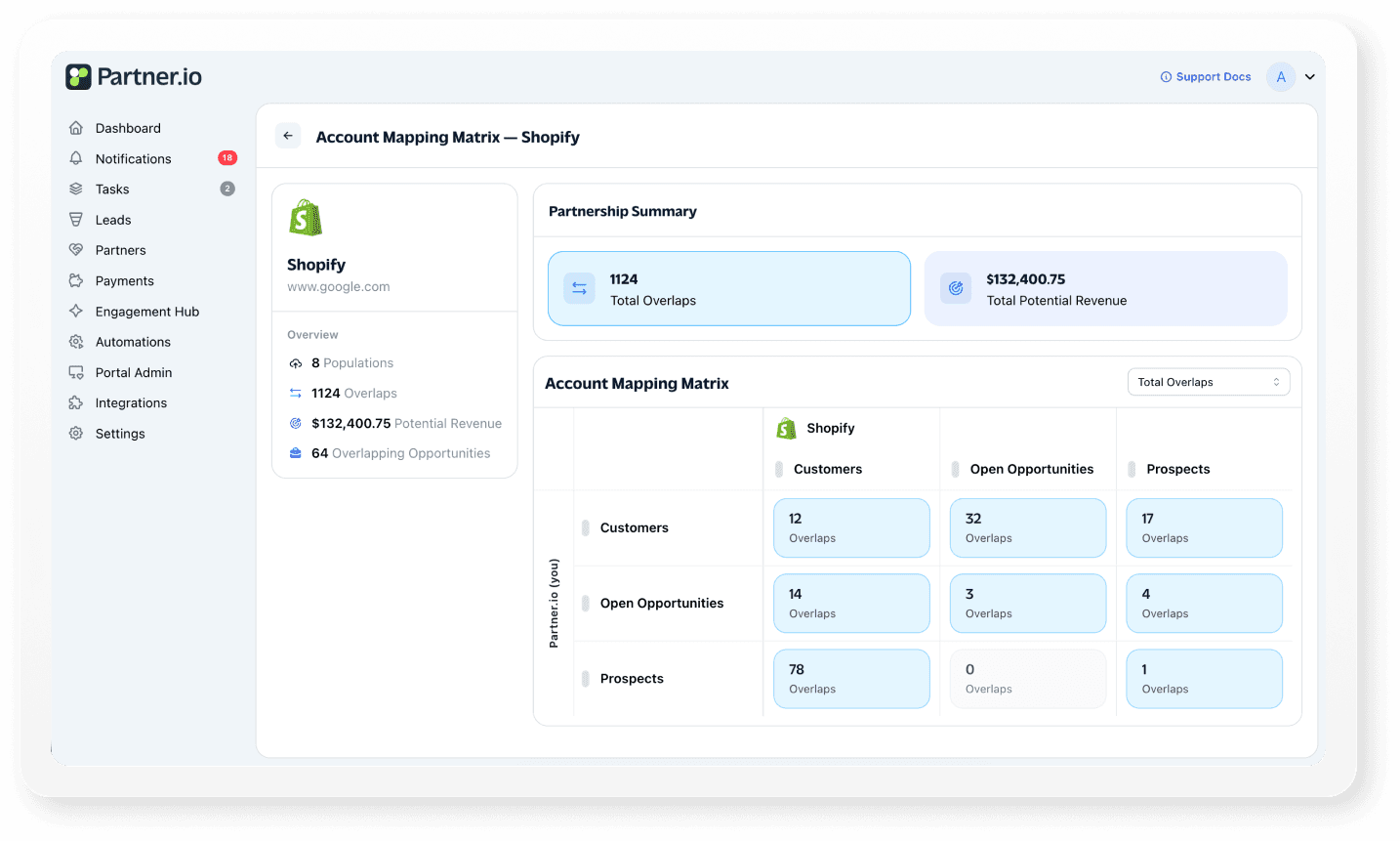
This is exactly why the new account mapping feature in Partner.io exists.
Account mapping lives directly on accounts, partners, and deals. Not in side docs. Not in inboxes. Not in someone’s head.
You can see:
Which partners are tied to which accounts
Their role in the deal, source, influence, or co-sell
What actions are agreed and who owns them
Partner Rooms hold the full context. Notes, decisions, next steps, all in one place.
During the weekly mapping call, everything is updated live. There is nothing to clean up later because the system is already the truth.
This is account mapping that actually runs revenue, not reports on it.
The upside that most teams do not expect
Run this weekly, and something shifts.
Partners stop guessing how you sell.
Sales stops underestimating partner leverage.
Trust builds because credit and attribution are visible.
Coordination becomes instinctive. Deals move faster. Fewer calls are needed because fewer mistakes are made.
That is when partner-led growth stops feeling fragile and starts compounding.
The line in the sand
Account mapping is not a nice-to-have anymore.
If you are co-selling without it, you are guessing. If you are guessing, you are leaking revenue.
This new account mapping capability exists for one reason: to stop deals slipping through the cracks and turn partner relationships into repeatable advantage.
Use it properly and it becomes unfair.
Ignore it and your competitors will not.
Build a cleaner, faster way to co-sell, starting with how you map accounts.