Interviews
Performance Review Template That Actually Improves Performance

The Performance Review Template That Turns Feedback Into Progress
Most performance reviews produce paperwork, not progress.
Pages get filled. Ratings get assigned. Nothing changes.
Ask someone six months later what came out of their last review. They struggle to answer. The conversation happened. The impact did not.
The issue is not intent. It is structure.
When reviews rely on loose notes and scattered feedback, they drift toward opinion. A clear performance review template forces the conversation to focus on evidence, patterns, and direction.
Done right, the review becomes less about judging the past and more about shaping what happens next.
Why Performance Reviews Break
Look at how many review cycles actually run.
Managers write a few paragraphs. Employees list recent work. Someone adds a rating. The document gets filed.
Three things go wrong.
Feedback becomes subjective. Evidence gets lost in narrative.
Improvement areas stay vague. People leave the meeting knowing they should improve, but not knowing where to start.
Development plans disappear. The document never gets opened again.
Structure fixes this. A strong template pulls the right signals into one place and forces clarity.
The Four Signals Every Performance Review Needs
Useful reviews capture four types of insight.
Miss one, and the picture becomes distorted.
Self reflection
Employees often see their own progress more clearly than anyone else. Capturing achievements, strengths, and ambitions provides context that managers might miss.
Manager evaluation
Managers connect work to outcomes. Their job is to assess impact and direction.
Peer observation
Colleagues notice behaviours that rarely appear in formal reports, especially around collaboration.
Structured assessment
Clear categories turn subjective opinions into comparable evaluations.
When these signals sit in the same document, patterns emerge quickly.
Breaking Down the Performance Review Template
A good template is not a form. It is a framework for thinking.
Each section exists for a reason.

Employee Information
Start with context.
Employee name
Role
Manager
Review period
Completion date
This sounds administrative. It is not. Without context, reviews become isolated snapshots instead of part of a long term record.
Self Assessment Summary
Self reviews reveal how people see their own performance.
The template focuses on four prompts.
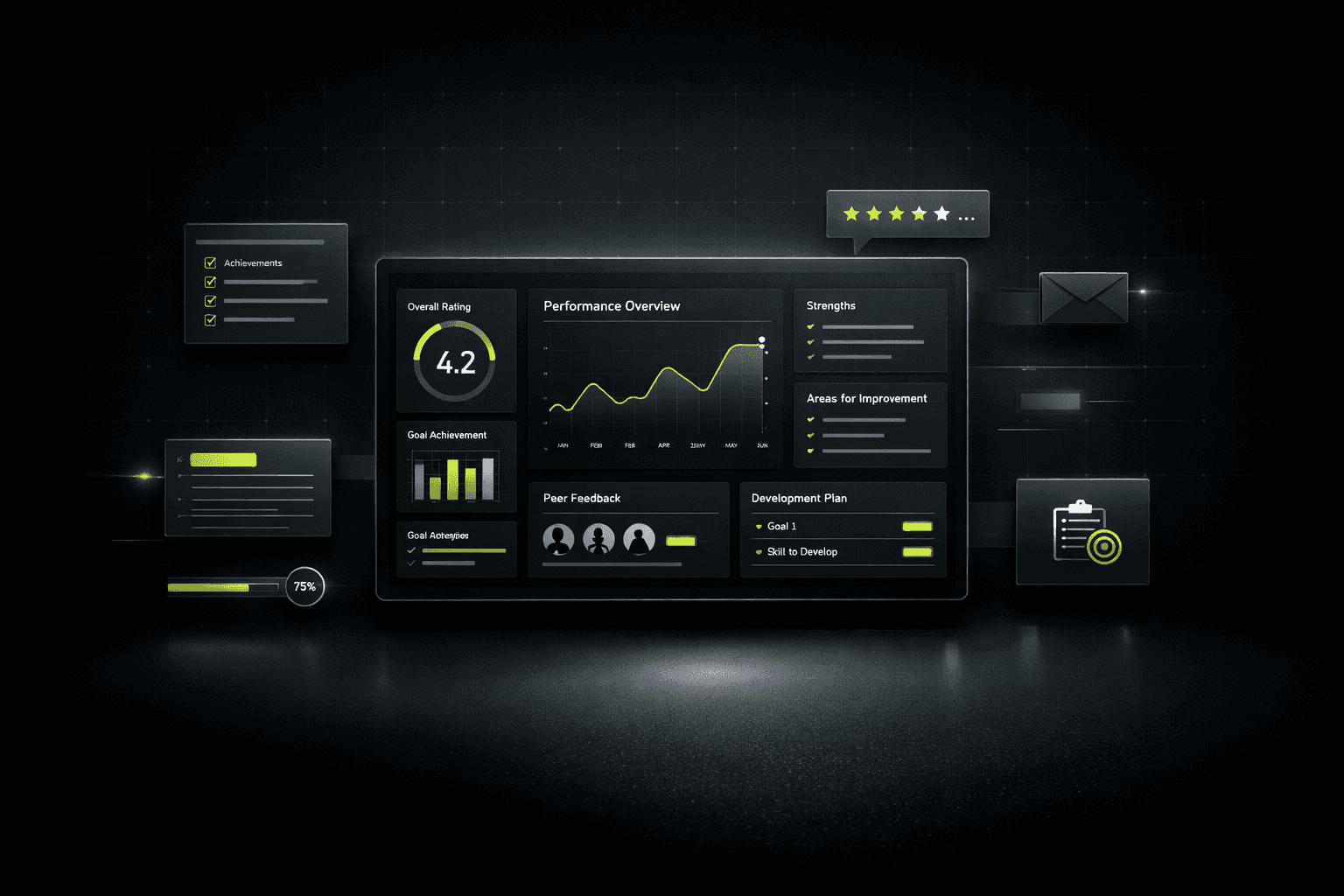
Key achievements
What moved the needle.
Reported strengths
Capabilities the employee believes define their contribution.
Areas for improvement
Self awareness is often the strongest signal of growth potential.
Career aspirations
Direction matters. Ambition shapes development plans.
This section sets the stage for the entire review.
Manager Review Summary
Managers provide the external perspective.
The template pushes the review toward outcomes.
Did goals get achieved?
What contributions created measurable impact?
Where does improvement matter most?
Is the person ready for greater responsibility?
These prompts force specificity. Vague feedback becomes harder to hide.
Peer and 360 Feedback
Peer feedback reveals patterns that managers may never see.
The template surfaces four signals.
Collaboration strengths
Communication habits
Common improvement areas
Examples of impact
When the same themes appear across multiple peers, the signal becomes clear.
Overall Performance Assessment
This section creates alignment.
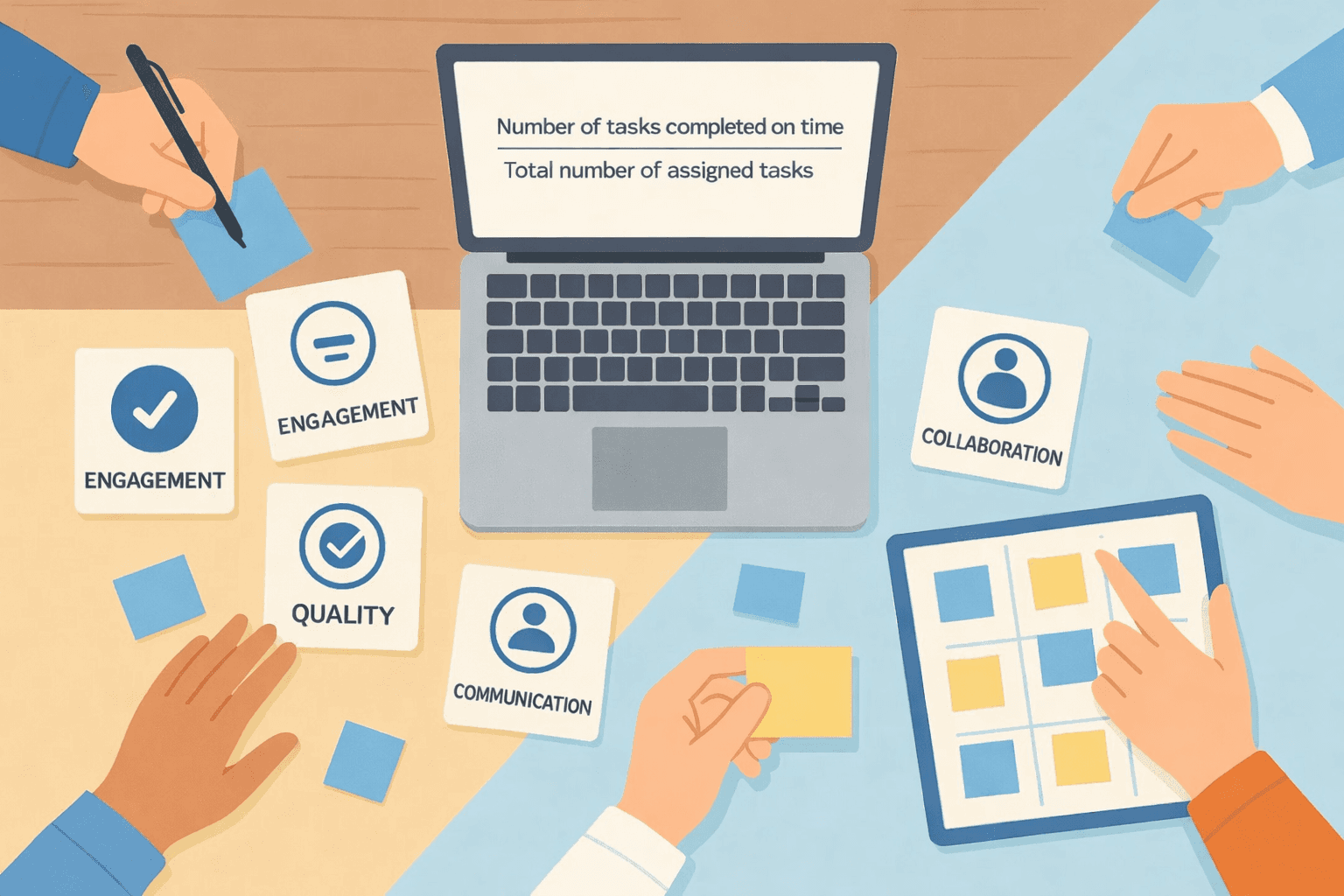
Performance is evaluated across four categories.
Goal achievement
Skills and competencies
Collaboration and teamwork
Growth and potential
Each category includes a rating and supporting notes.
That pairing matters. Ratings alone invite debate. Notes explain the reasoning.
Development Plan
This is where most reviews fail.
They stop at evaluation.
A strong template pushes forward.
Goal 1
Goal 2
Skill to develop
Training or mentorship
These entries turn the review into a roadmap. The conversation shifts from judgement to progress.

Final Rating and Commentary
The rating summarises the story already told.
Exceeds expectations
Meets expectations
Needs improvement
The important part is the commentary. It connects the evidence from earlier sections into a clear narrative.
When the template is used properly, the final rating should never surprise anyone in the room.
The CLEAR Review Model
Templates work best when paired with a simple process.
Use the CLEAR model.
Capture
Collect self reviews, manager input, and peer feedback.
Link
Connect achievements to measurable outcomes.
Evaluate
Assess performance across defined categories.
Align
Agree on strengths, improvement areas, and expectations.
Roadmap
Define concrete development goals.
Follow this sequence and the review becomes a planning session, not a formality.
What This Looks Like in Practice
Consider a mid year review.
An employee highlights three projects that improved operational efficiency.
The manager confirms the impact. One project reduced internal turnaround time by eighteen percent.
Peer feedback surfaces something else. Several colleagues mention the employee often steps in to solve complex problems across teams.
A pattern appears.
This person is not just efficient. They are becoming a go to problem solver.
The development plan shifts accordingly. The manager asks them to lead a cross team initiative in the next quarter.
The review stops looking backward. It points forward.
Templates Turn Reviews Into Systems
The difference between weak and strong review processes is rarely effort. It is structure.
Templates create consistency.
Consistency builds fairness.
Fairness builds trust.
Without a template, every manager runs reviews differently. With one, the organisation develops a shared language around performance.
Managers also stop staring at blank pages. The structure guides the conversation.
Where Assemble Fits
Once teams rely on templates, another problem appears.
Documents multiply. Formats drift. Every review cycle starts from scratch.
Tools like Assemble solve that.
Instead of copying documents or rebuilding forms, teams generate structured review templates instantly. Self assessments, manager evaluations, peer feedback, and development plans all follow the same framework.
Consistency improves. Preparation time drops. Reviews become easier to run and easier to compare across cycles.
Templates stop being documents.
They become infrastructure.
The Real Purpose of a Performance Review
A good review answers three questions.
What did this person achieve?
Where are they strongest?
What should they focus on next?
Without structure, those answers stay buried in paragraphs.
With the right template, they become obvious.
And when that structure lives inside a system like Assemble, running great reviews stops feeling like work.
Build smarter templates for performance reviews and other critical workflows. Explore what you can create with Assemble.
Recommended Reading