Podcast
Crafting the Ultimate Marketing Campaign Brief Template

Crafting the Ultimate Marketing Campaign Brief Template
Imagine you’re gearing up to launch a major marketing campaign. There are ads to design, social posts to schedule, emails to write, perhaps even a webinar or event to plan – a lot of moving parts. Without a clear plan, it’s easy for details to slip through the cracks or for your team to lose focus. This is where a marketing campaign brief becomes a game-changer. A well-crafted campaign brief serves as a blueprint for your marketing campaign, keeping everyone literally on the same page from idea to execution. It provides direction for the campaign and ensures that all team members know what’s happening and what to expect. In short, the campaign brief is your roadmap to a cohesive and effective campaign.
But a brief is only as useful as the thought put into it. The best marketers don’t start from scratch each time – they use a marketing campaign brief template to organize their strategy. Templates provide a predictable, repeatable framework so you know you’re capturing all the essential information every time. In fact, using a template can be a huge time-saver for busy teams running multiple campaigns, ensuring no critical detail gets overlooked. It brings order to the chaos of campaign planning and aligns your creative and marketing teams toward the same goals. Let’s dive into what exactly goes into a great marketing campaign brief and how you can create one that sets your campaign up for success.

What Is a Marketing Campaign Brief (and Why Do You Need One)?
A marketing campaign brief (sometimes called a creative brief) is a living document that outlines the strategy and details of your marketing campaign. Think of it as the master plan for your campaign. It typically covers the campaign’s objectives, target audience, key messages, tactics, timeline, and resources required. The brief’s purpose is to guide everyone involved – from designers and copywriters to project managers and executives – ensuring they all understand the campaign’s game plan and how each piece fits together.
Why is this so important? Because campaigns involve many stakeholders and channels, a brief keeps all those pieces coordinated. It helps prevent misunderstandings and scope creep by clearly defining what the campaign is (and isn’t) about. A good brief answers fundamental questions upfront: What are we trying to achieve? Who are we targeting? What message should we communicate? How and when will it roll out? By nailing down these answers, you avoid confusion later. Marketers use briefs to outline goals, strategy, and execution plans so that all stakeholders remain informed and focused. In practice, campaign briefs are useful for all kinds of initiatives – from blogger outreach and influencer promotions to social media blitzes and PR drives. No matter the campaign type, a brief serves as an anchor for your team, anchoring your ideas and ensuring everyone knows why the campaign exists and how it will succeed.
Perhaps most importantly, a brief forces you to think through every aspect of the campaign before execution. This upfront effort can reveal gaps or inconsistencies in your plan. It’s much cheaper and easier to refine your strategy on paper than once the campaign is live. In fact, laying out a campaign brief helps teams spot potential issues early so they can be addressed proactively. The brief can acknowledge risks and dependencies and include contingency plans, meaning you’ve already thought about “what if X happens?” before it does. This way, the team can recognize challenges before they occur and plan for them, rather than scrambling later. In summary, a solid marketing campaign brief ensures clarity, alignment, and preparedness – it’s hard to imagine running a complex campaign without one.
10 Key Elements of an Effective Marketing Campaign Brief
So, what does a comprehensive campaign brief actually include? While every campaign has its nuances, most marketing campaign briefs contain a similar set of core sections. Below are ten key elements you’ll want to cover in your brief, and why each is important:
Campaign Overview: Start with the high-level basics. Give your campaign a name and note the owner or team in charge. Include key dates – for example, the planned launch date and the overall campaign duration. If there’s a set budget, list that here too. The overview should also record the date it was last updated (so everyone knows if they have the latest version). Essentially, this section is the quick reference for what the campaign is, who’s leading it, when it runs, and how much you plan to spend. It sets the context for everything that follows.
Objectives & Goals: Clearly define what you want this campaign to achieve. Is it about lead generation, increasing sign-ups, boosting brand awareness, launching a new product, or something else? Specify a primary objective and any secondary objectives. Aim to make these goals as concrete as possible – ideally following the SMART criteria (Specific, Measurable, Attainable, Realistic, Time-bound). For example, instead of a vague goal like “get more customers,” you might set a goal to “use influencers to gain 500 new user sign-ups in one week”. Measurable goals like this give your team a target and make it easy to evaluate success later. In this section, you can also outline key performance indicators (KPIs) tied to each objective (e.g., number of leads, conversion rate, revenue generated) so everyone knows how success will be measured.
Target Audience: Describe who you’re trying to reach with this campaign. A great campaign speaks to a specific audience, so paint a picture of your ideal customer or persona. Include demographics (age, gender, location, job role, etc.) and psychographics (interests, behaviors, pain points) relevant to the product or message. For instance, are you targeting tech-savvy millennials in urban areas, or perhaps parents of young children who value safety and savings? The more you know about your target audience, the better you can tailor the campaign to resonate with them. This section ensures everyone understands the audience’s mindset and needs. It will guide decisions in messaging and channel selection later. Depending on the campaign, you might even segment the audience into primary and secondary groups. Make it clear who the campaign must reach and any nice-to-have audiences. A well-defined target audience keeps your campaign focused and your messaging relevant.
Key Messages: Outline the core message or story you want the campaign to communicate, along with a few supporting points. Essentially, what is the big idea you want your audience to remember? All campaign content should consistently reflect this key message. For example, if you’re launching a new eco-friendly product, your core message might be about sustainability and innovation, supported by points about quality and community impact. List your main tagline or slogan if you have one, and the primary value proposition you’re conveying. Then add 2-3 supporting messages or themes that bolster the core message. Having these spelled out in the brief keeps your writers and designers aligned on the narrative. It also ensures that, even if you produce a variety of assets (videos, ads, blog posts, etc.), they all feel cohesive and tell a unified story. In fact, in an integrated campaign with multiple channels, the brief should explain how all pieces will be unified by a common storyline or theme. Consistency here is key – a campaign is far more powerful when every touchpoint reinforces the same core message.
Campaign Strategy & Tactics: This section details how you plan to execute the campaign and reach your audience. Describe your overall strategy and list the channels you’ll use – for example, will this campaign run on social media, email, search ads, events, direct mail, or all of the above? For each channel, note the specific tactics or format. Maybe you’ll use Instagram and LinkedIn for organic social posts, Google Ads for paid search, a webinar for an event tactic, and a targeted email sequence for nurturing leads. Outline these plans so it’s clear what the multi-channel approach looks like. If helpful, mention any strategic frameworks or analyses (some teams include a brief SWOT analysis here to note strengths, weaknesses, opportunities, threats that could affect the campaign). The goal is to explain why you chose these channels and how they’ll work together to achieve the objectives. If certain channels require specific considerations (e.g., character limits on Twitter, or compliance rules for email), you can highlight those. Essentially, the strategy section translates the objectives into an actionable game plan.
Deliverables: List the tangible assets that need to be created for the campaign. These are the outputs the team will produce, which could include things like ads, videos, graphics, landing pages, blog posts, emails, press releases, and so on – whatever pieces are necessary for the campaign’s tactics. Be as specific as possible. For example, instead of saying “social media content,” list “5 Instagram carousel ads, 3 Twitter image posts, 1 YouTube video (30 seconds),” etc. Alongside each deliverable, it’s helpful to assign an owner or responsible person/team and perhaps note the intended channel. This way, everyone knows who is creating what. Defining deliverables upfront also helps with resource allocation: if you realize the campaign needs 10 different videos but you only have one videographer, you might need to adjust scope or timeline early. By enumerating every content piece and asset, you ensure nothing is forgotten and that all contributors are aware of their responsibilities. This section essentially breaks the big campaign idea into actionable to-dos for your team.
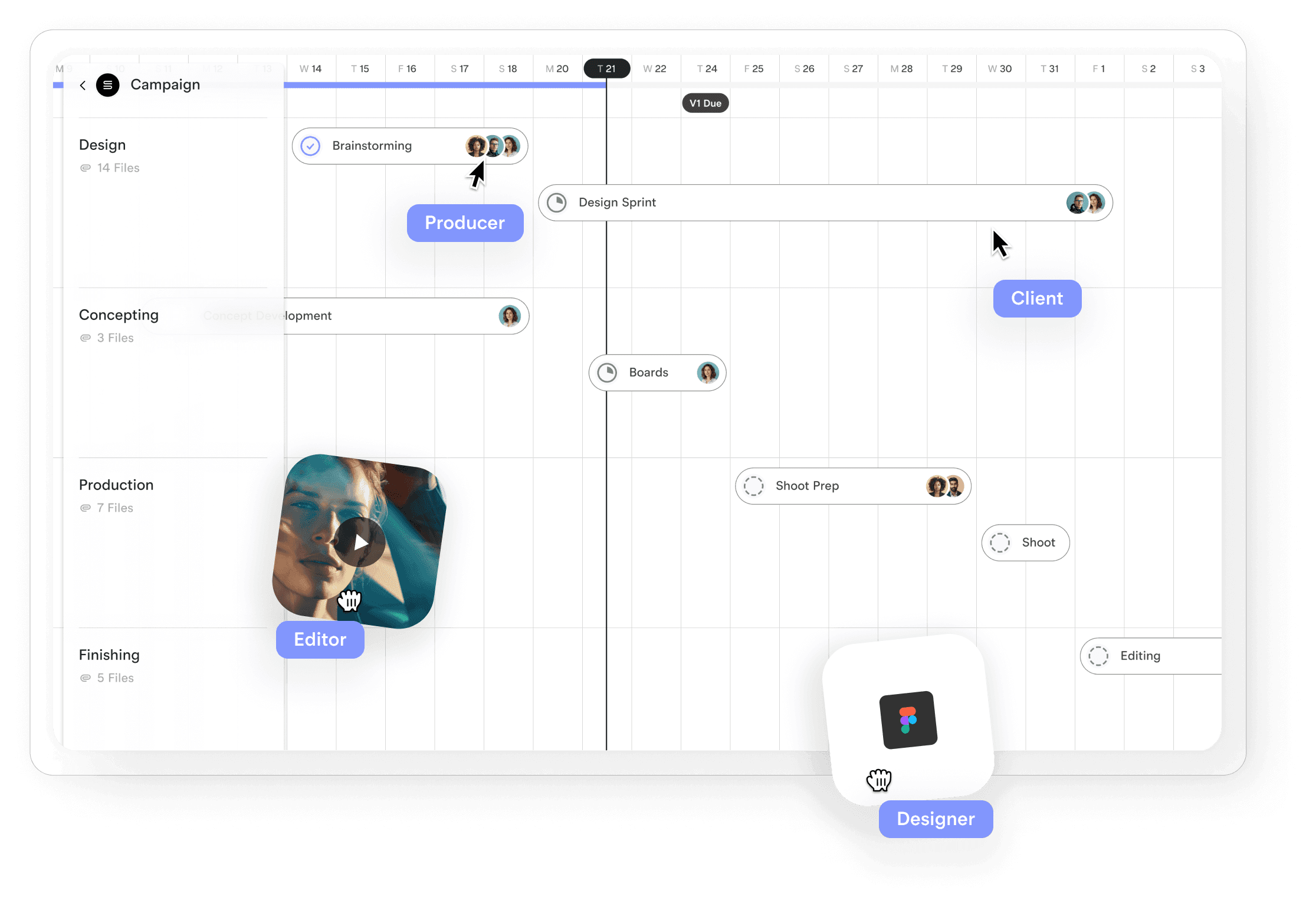
Timeline & Milestones: Every campaign operates on a schedule. In this section, lay out the key milestones and deadlines from start to finish. Include the campaign kickoff date, deadlines for major deliverables (e.g., creative assets completed by, landing page live by dates), the launch date, and the campaign end date if applicable. If the campaign will be monitored or optimized mid-flight, you might include a mid-campaign check-in or review date as a milestone. Presenting this as a timeline ensures that all team members can see the overall sequence and timing. It also helps set expectations – for instance, if the launch is next quarter, the brief’s timeline will clarify by when each team needs to have their parts ready. You might format this as a simple list of milestones with owners and due dates, or even a visual timeline. The main point is to answer: Who does what by when? Having a realistic timeline in the brief prevents last-minute surprises and gives everyone a shared schedule to work from. Remember to factor in time for reviews, revisions, and approvals in your timeline. A rushed campaign can lead to mistakes, so make sure the schedule is achievable (it often pays to discuss timeline feasibility with each contributor as you formulate the brief).
Budget: If your campaign has financial constraints or an allocated spend, detail that in the brief. This includes the total budget and a breakdown of how that budget will be used. For marketing campaigns, the budget typically covers two areas: production (the cost of creating content and assets – e.g., design hours, video production, copywriting, freelance or agency fees) and distribution (the cost of media or advertising spend – e.g., ad platform budgets, event fees, printing costs). In the brief, you might outline the budget for each major channel or tactic. For example: “Total budget $50,000 – comprising $20k on Facebook/Instagram ads, $10k on Google Ads, $15k on an event sponsorship, $5k on content production.” If there are any financial constraints or assumptions (like expecting free internal design resources or using an existing video studio), note those too. A clear budget section keeps the campaign financially on track and helps stakeholders understand the scale of investment. It also guides decision-making; the team will know not to propose ideas that blow the budget. If no tight budget is set, you can state that and possibly include a rough expected cost or note “to be determined.” But usually, having at least a ballpark budget in the brief is essential for planning purposes.
Risks & Dependencies: Savvy campaign planners think ahead about what could go wrong (risks) and what external factors their plan relies on (dependencies). Use this part of the brief to list any known risks that might impact the campaign’s success, along with how you plan to mitigate them. Risks could include things like “Creative production delays,” “Regulatory approval needed for content,” “Competing product launch by a rival,” or even “low audience turnout at event due to seasonality.” For each risk, you can add a note about the mitigation plan (for example, securing executive buy-in early to avoid delays, or having a backup promotion if the first one underperforms). Dependencies are the things your campaign outcome depends on that you might not directly control – for instance, “Product feature X must be released by June 1 for the campaign to launch,” or “Partner organization to provide their email list,” or “Legal team approval on all copy.” Listing these helps everyone understand the critical path and where a holdup might occur. An effective campaign brief doesn’t ignore potential pitfalls; instead, it acknowledges them and plans for them. By anticipating issues before they happen, you enable the team to respond proactively and keep the campaign on track. This section of the brief can be crucial for larger organizations where coordination across departments is required, as it highlights where communication or extra caution is needed.
Approvals: Last but not least, clarify the approval process. Identify who needs to sign off on the campaign brief itself and on key deliverables. Common approvers might include a Marketing Director or CMO for the overall strategy, a Product Lead for messaging about a specific product, and perhaps Legal or Compliance for certain content. In the brief, you can create a simple table of approvers with their names and titles, and even an “Approval date” field if you plan to circulate the brief for formal sign-off. Having this in writing avoids the “I thought so-and-so had approved this” confusion down the line. It ensures that all necessary stakeholders will review the plan and that nothing moves forward without the right eyes on it. In addition, knowing the approvers and their deadlines can be part of your timeline planning – e.g., if Legal sign-off is needed by a certain date, you’ll factor that into your schedule. While this section may seem procedural, it’s important for accountability. It gives everyone confidence that the campaign has been vetted by the right people before launch. And once those approvals are obtained, the team can execute with assurance. In some cases, especially at agencies or in cross-company campaigns, you might have the client or partner approvals here as well. Tailor it to your situation, but don’t skip listing out who has final say on the plan and outputs.
These ten elements together form a comprehensive campaign brief. By covering each one, you create a document that addresses the who, what, why, when, where, and how of your campaign. Most importantly, it provides a single source of truth that anyone on the team can reference at any time to understand the campaign. As a result, your marketing efforts stay organized and strategic rather than reactive. As one marketing expert put it, a campaign brief template lets you collect and share all the important information with your team so that no details get overlooked. It’s a simple idea with a powerful effect – clarity upfront leads to better work down the line.

Tips for Writing and Using Your Campaign Brief
Having the template is a great start, but how you fill it out and implement it also determines its success. Here are some best practices to make your marketing campaign brief truly effective:
Collaborate on the Brief: Don’t craft the brief in isolation. Involve key team members and stakeholders while drafting it. By seeking input from others – whether it’s the sales team, customer support, or an external partner – you’ll end up with a more comprehensive brief that covers perspectives you might have missed. It also gains buy-in. People are more committed to a plan they helped shape. Marketing guides often stress getting input from relevant departments and colleagues to ensure you haven’t missed any crucial details. So host a kickoff meeting or brainstorming session to gather insights before you finalize the brief. This way, the brief becomes a shared vision rather than one person’s document.
Keep It Clear and Concise: While your brief should be thorough, it shouldn’t be an overstuffed novella. Aim for clarity and brevity. Remember, this document is meant to be used by busy people. Make it scannable – use headings, bullet points, and straightforward language. If a section gets too long or technical, consider moving those details to an appendix or separate reference. The main brief should highlight what truly matters for executing the campaign. Being concise also forces you to hone in on the core strategy and message. As the saying goes, “If you can’t explain it simply, you don’t understand it well enough.” A crisp brief is easier for everyone to understand and follow. That said, don’t omit important specifics – just present them as cleanly as possible. One trick is to use lists (as we did above) for things like deliverables, milestones, etc., which improves readability.
Ensure Consistency and Cohesion: Use the brief to enforce a cohesive approach. Check that the objectives align with the metrics you’re tracking, that the target audience aligns with the key message and channels chosen, and that the deliverables all tie back to the strategy. A campaign can involve many creative pieces, but the brief should act as the glue that holds them together under one unified campaign concept. All team members should walk away with the same understanding of the campaign’s story and goals. If anything in the brief feels contradictory or unrelated, refine it. For instance, if your key message is all about innovation but your target audience is described as ultra-conservative, that’s a flag to address – maybe the audience needs rethinking, or the message does. The brief is a great place to spot such inconsistencies on paper. Use it to double-check that every piece of the plan reinforces the central campaign idea and nothing is working at cross purposes.
Treat the Brief as a Living Document: A marketing campaign brief isn’t meant to gather dust. Throughout the campaign, refer back to it regularly to guide decisions. If circumstances change – maybe a new competitor enters the scene, or you get mid-campaign data that suggests a pivot – don’t be afraid to update the brief. It’s better to adjust the plan consciously (and document those changes) than to drift away from the plan without anyone realizing. Some campaigns, especially long-running ones, might evolve. Keeping the brief updated keeps everyone aligned, even as you make tweaks. Just be sure to communicate any significant changes to all stakeholders (and mark the “last updated” date!). By viewing the brief as a dynamic guide rather than a static contract, you maintain flexibility while still preserving clarity and alignment.
Leverage Template Tools and Software: You don’t have to manage your campaign briefs in a basic Word doc or spreadsheet. Consider using a dedicated template or project management tool to create and share your brief. Assemble is a platform that specializes in template-driven project documents and collaboration. Assemble’s community template library offers professionally crafted templates – including a fully customizable creative brief template – that you can use as a starting point. Using a tool like this, you can fill in your marketing campaign brief online, collaborate with team members in real time, and ensure everyone always has access to the latest version. Another benefit is that you can reuse and refine your brief template for future campaigns. After your campaign wraps up, take a moment to reflect: Did the brief miss any information that would have been helpful? If so, update your template so the next campaign brief is even better. Over time, you’ll build an internal library of templates that perfectly fit your organization’s needs. This kind of optimization is much easier when you use a template builder. In Assemble’s case, you can even save your completed brief as a new template for the future, streamlining your workflow significantly. By adopting a template tool, you ensure consistency across campaigns and save precious time that would otherwise be spent reinventing documents from scratch.
Make It Accessible and Encourage Engagement: Once your brief is written, make sure it’s easily accessible to everyone involved in the campaign. Share it in your team workspace, project drive, or through your template software (e.g., Assemble lets you share documents with one click to your team). Encourage team members to actually read it and ask questions. Sometimes, holding a brief walkthrough meeting is useful – go over the highlights of the brief with the team and clarify any points. This also reinforces the importance of the brief and demonstrates leadership buy-in. You want the campaign brief to be the reference point that people consult whenever there’s uncertainty. When new team members or vendors join mid-project, having this document handy will get them up to speed in no time. Ultimately, a brief is only valuable if it’s used. So integrate it into your kickoff process, your project updates, and even your post-mortem review. It’s the backbone of your campaign strategy.
By following these practices, your marketing campaign brief will not only be well-written but also well-utilized. It will truly function as the strategic tool it’s meant to be – guiding your team smoothly from the planning stages all the way through to execution and analysis.
From Brief to Success: Bringing Your Campaign to Life
Investing the time to create a thoughtful marketing campaign brief pays off when you see the campaign run like a well-oiled machine. With a clear brief in hand, your creative team knows the story they need to tell, and your marketing team knows the targets they need to hit. Everything is aligned. Instead of scrambling or second-guessing, the team can focus on producing great work and engaging your audience. The brief has already answered the big questions, so day-to-day execution becomes more efficient and purposeful.
Moreover, a good brief can inspire creativity rather than constrain it. Paradoxically, having defined parameters (goals, audience, message, etc.) gives your creative folks a strong foundation on which to brainstorm innovative ideas. They know the sandbox they’re playing in, which often leads to more relevant and impactful concepts. As one industry specialist noted, a creative brief acts as an inspiration and motivation tool that encourages vibrant thinking to solve the challenge at hand. When everyone is clear on the vision, they can get more creative with how to achieve it, without veering off track.
Finally, don’t forget to loop back once the campaign is done. Gather your team and evaluate the results against the objectives and KPIs you outlined in the brief. Did you hit the targets? What went well and what didn’t? Use these insights to refine your next brief. Over time, you’ll develop an intuition for what a realistic goal is, how much time is truly needed for certain deliverables, which messages resonate best, and so on. Your briefs will get sharper, and your campaigns will get smoother.
In conclusion, a marketing campaign brief is the secret weapon behind successful campaigns. It provides structure, alignment, and insight, turning ambitious marketing ideas into executable plans. By using a robust template and following best practices, you set your campaigns on a firm foundation from day one. So before you dive into your next big marketing initiative, take a step back and craft that brief! And if you want to save time, consider using a template from Assemble to kickstart the process – you’ll be able to hit the ground running with a proven framework and customize it to your needs With a solid brief at the helm, you’ll find your team is more coordinated, your messaging is more consistent, and your marketing campaigns deliver results that you can be proud of. Here’s to crafting campaign briefs that drive impactful campaigns and ultimately, marketing success.